

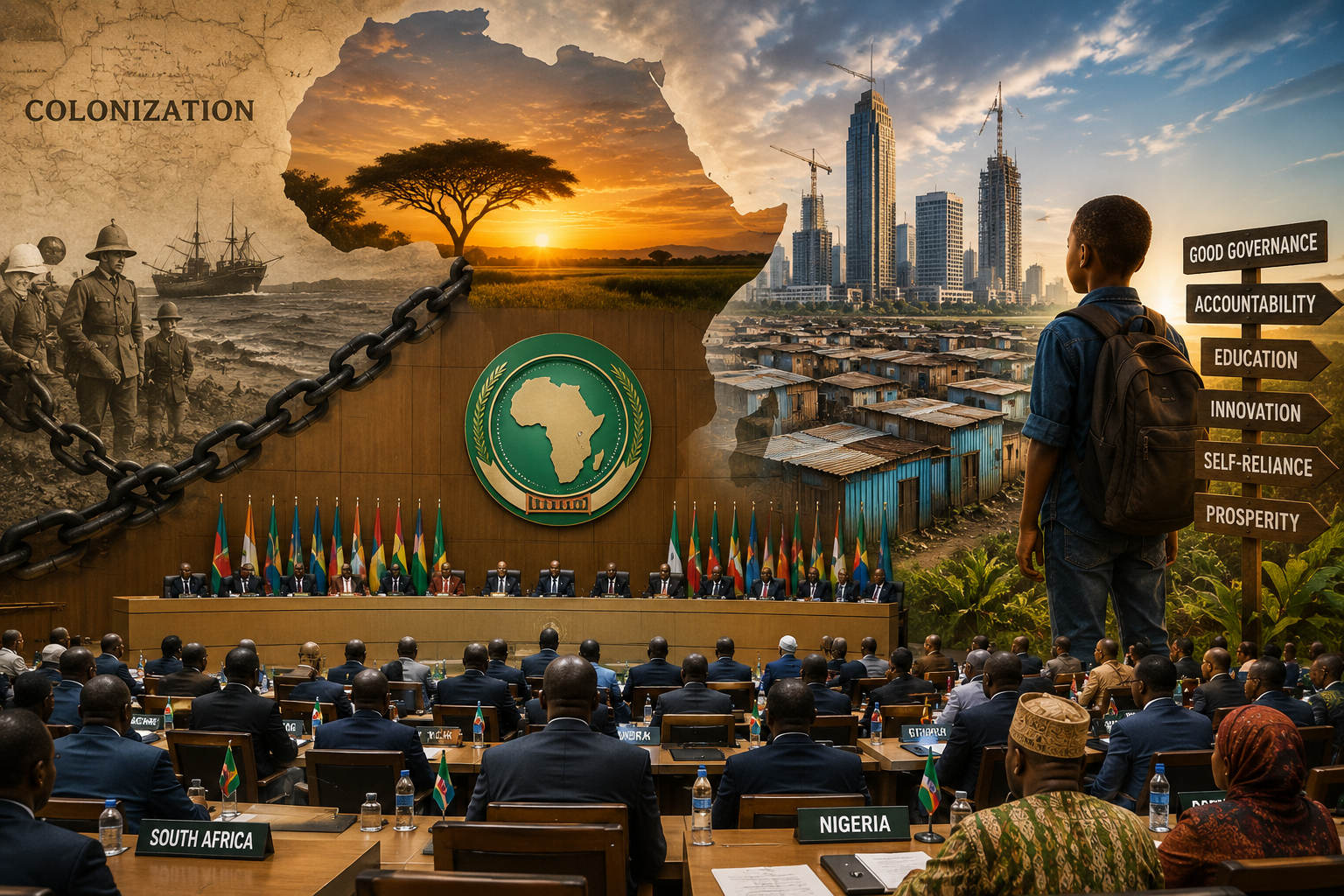
For decades, discussions about Africa’s development have often centered on the legacy of colonialism, unequal global economic systems, and the influence of powerful foreign governments and institutions. While these factors have undeniably shaped the continent’s trajectory, many observers argue that they do not fully explain Africa’s persistent development challenges.
A growing number of African voices are calling for greater attention to domestic governance, leadership accountability, and responsible management of the continent’s abundant natural and human resources.
Critics contend that despite Africa’s vast reserves of minerals, fertile land, youthful population, and entrepreneurial talent, many countries continue to struggle with poverty, unemployment, weak infrastructure, and limited industrialization. They argue that corruption, mismanagement of public resources, patronage politics, and the concentration of wealth among political elites have significantly undermined development efforts.
According to this perspective, some political leaders have prioritized building personal fortunes and family dynasties while public institutions remain underfunded and basic services lag behind.
Observers also point to concerns surrounding the role of some international development agencies, non-governmental organizations (NGOs), and foreign partners. While many organizations have contributed positively through humanitarian assistance, healthcare, education, and economic development, critics argue that certain projects have failed to produce lasting structural change. Some contend that these initiatives can become dependent on continuous aid rather than empowering communities to achieve long-term self-sufficiency.
Others argue that foreign influence in African politics and economies has, at times, aligned with domestic political interests, creating systems that benefit a small group of local and international actors rather than the broader population.
Supporters of greater African self-reliance say the continent must increasingly define its own development agenda by strengthening institutions, promoting transparency, investing in education and innovation, encouraging industrialization, and reducing excessive dependence on external assistance.
They argue that meaningful transformation will require both honest recognition of historical injustices and a willingness to confront present-day governance failures.
Analysts note that sustainable development is unlikely to come solely through blaming external actors or through foreign aid alone. Instead, they suggest lasting progress depends on accountable leadership, strong democratic institutions, citizen participation, regional cooperation, and policies that prioritize long-term national development over short-term political interests.
As debates over Africa’s future continue, many believe the continent’s greatest opportunity lies in combining lessons from history with renewed commitment to good governance, economic independence, and home-grown solutions capable of unlocking Africa’s full potential.