

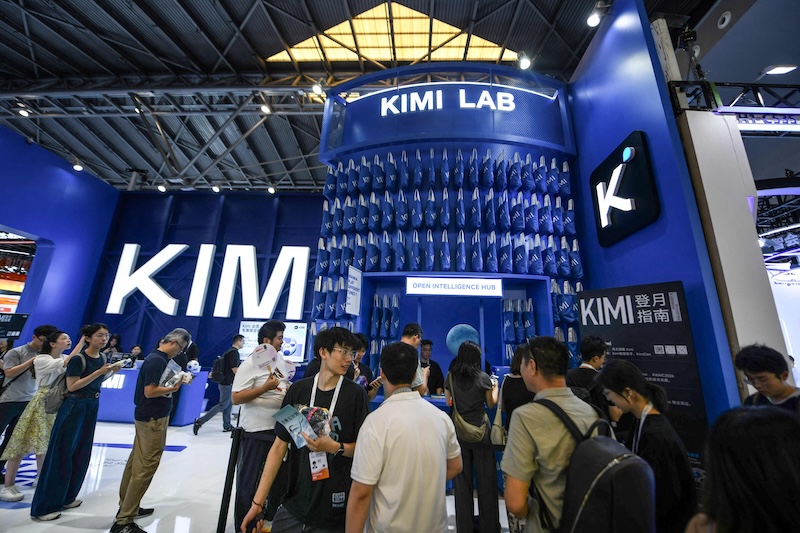
China has placed international cooperation at the heart of global artificial intelligence development during the 2026 World AI Conference (WAIC) and High-Level Meeting on Global AI Governance, unveiling new initiatives aimed at expanding AI access, strengthening international governance, and promoting open-source innovation.
The conference, held in Shanghai, brought together government leaders, researchers, technology companies, universities, and international organizations from more than 100 countries to discuss the future of artificial intelligence and develop common approaches to innovation, governance, and safety.
Opening the conference on July 17, Chinese President Xi Jinping described artificial intelligence as one of the defining technologies of the modern era and urged countries to pursue cooperation rather than technological division.
Xi said AI development should remain people-centered, secure, open, and inclusive while emphasizing that global governance must be built on multilateral cooperation and shared responsibility.
As part of China’s new international commitments, Xi announced that the country will provide 5,000 AI training and seminar opportunities over the next five years for developing nations. He also revealed plans to establish AI application cooperation centers with regional organizations including ASEAN, the African Union, the League of Arab States, CELAC, BRICS, and the Shanghai Cooperation Organisation.
China further announced that 30 countries will gain access to its AI-powered MAZU meteorological early warning system, designed to improve disaster preparedness and weather forecasting.
New International AI Organization Launched
One of the conference’s most significant outcomes was the establishment of the World Artificial Intelligence Cooperation Organization (WAICO), a new independent intergovernmental body dedicated to international AI cooperation and governance.
Representatives from 29 countries signed the founding agreement on July 16, ahead of the conference opening. WAICO will be headquartered in Shanghai and aims to promote international collaboration on AI governance frameworks, technical standards, research partnerships, and knowledge exchange.
According to its founding charter, the organization will operate under the principles of the United Nations Charter while promoting extensive consultation, joint participation, and shared benefits.
Founding members include Kazakhstan, Indonesia, Laos, Pakistan, Russia, and several other participating nations.
The launch of WAICO reflects growing international efforts to establish coordinated governance mechanisms as artificial intelligence becomes increasingly integrated into healthcare, education, manufacturing, finance, transportation, and public administration.
Open-Source Weather AI Introduced
The conference also showcased new AI applications for public services.
China’s Meteorological Administration introduced Fenghe, an open-source large language model developed specifically for meteorological forecasting and climate services.
Officials said the model has been trained using approximately 50 million tokens of weather-service data combined with authoritative meteorological datasets. It is designed to support weather forecasting, disaster risk assessment, emergency warnings, and public weather services.
The Chinese-language version offers personalized forecasts, weather recommendations, and risk alerts, while the international edition operates in both Chinese and English.
Authorities confirmed that the system has already been incorporated into the United Nations’ Early Warnings for All initiative, with developers worldwide invited to build new applications using the open-source platform.
Open Cooperation Takes Center Stage
Open-source development emerged as one of the conference’s central themes.
Xi emphasized China’s commitment to expanding openness in AI development, arguing that technological progress should benefit all countries rather than deepen global inequalities through protectionism or technological restrictions.
Conference discussions focused on a broad range of issues, including AI governance, industrial applications, education, scientific research, technical standards, public services, and international collaboration.
Commentary released alongside the conference argued that the future of artificial intelligence depends on whether countries choose rivalry or cooperation, warning that protectionist policies could fragment the global AI ecosystem and widen technological gaps between nations.
Instead, it highlighted joint research, talent exchanges, capacity building, and open innovation as essential pillars for sustainable AI development.
Global Dialogue on AI Governance
The 2026 World AI Conference reinforced Shanghai’s position as one of the world’s leading forums for international AI dialogue.
The combination of WAICO’s launch, expanded international training programs, regional cooperation centers, AI-powered public service initiatives, and open-source technologies underscored China’s strategy of pairing technological advancement with broader international engagement.
As governments worldwide continue developing regulatory frameworks for artificial intelligence, the conference highlighted growing recognition that international cooperation will play an increasingly important role in shaping the responsible development and governance of AI technologies.