

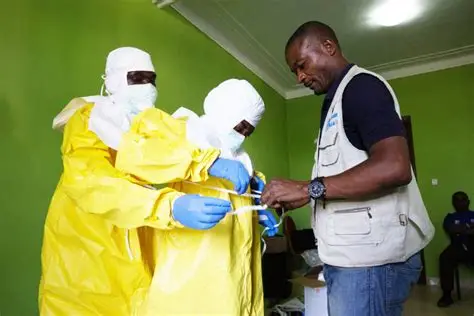
Doctors Without Borders (MSF) has established a specialized Ebola simulation training center in Kenya to prepare healthcare workers for deployment to the Democratic Republic of Congo (DRC), where the country’s latest Ebola outbreak has become the fastest-growing in its history.
The training facility, located on the outskirts of Nairobi, is designed to equip doctors, nurses and emergency responders with the practical skills needed to manage one of the world’s most dangerous infectious disease outbreaks.
The current Ebola outbreak in eastern DRC has claimed at least 600 lives since it was declared in mid-May, according to African health authorities. The epidemic has spread rapidly in a region affected by armed conflict, widespread poverty and misinformation, complicating response efforts.
Health workers have been among those most affected. Authorities report that 112 healthcare personnel have contracted the virus, with 35 losing their lives while responding to the outbreak.
The MSF simulation centre replicates real-world Ebola treatment conditions using hospital beds, mannequins, a mock laboratory and full personal protective equipment (PPE). The programme prepares responders not only for medical treatment but also for the physical and psychological demands of working in high-risk environments.
Trainees also receive instruction on engaging with local communities, conducting safe and dignified burials, preventing stigma against Ebola survivors and building public trust—critical elements in controlling outbreaks where fear and misinformation often hinder response efforts.
Cisse Papa Ndiaga, a community health worker from Senegal preparing for deployment to the DRC, said the training had highlighted the realities of working in protective equipment.
He noted that while medical professionals may possess theoretical knowledge, responding to Ebola in full protective gear presents entirely different challenges.
Dr. Diana Corben, an MSF physician serving in the Central African Republic, stressed that community engagement is as important as clinical care.
She said health workers must approach affected communities with empathy, explaining that the appearance of responders wearing full protective suits can be alarming for local residents unfamiliar with outbreak protocols.
Corben also emphasized the importance of preparing responders mentally for the emotional and physical pressures they will encounter in the field, noting that the simulation only offers a glimpse of the intensity of real outbreak conditions.
The training program began in mid-June and is expected to continue through August, with around 100 participants trained each month. While most trainees have so far been MSF staff, the facility will also train officials from Kenya’s Ministry of Health and personnel from other humanitarian organizations.
Following the program, Ndiaga said he felt better prepared for his upcoming mission, admitting that although he was still apprehensive, the training had significantly boosted his confidence.