

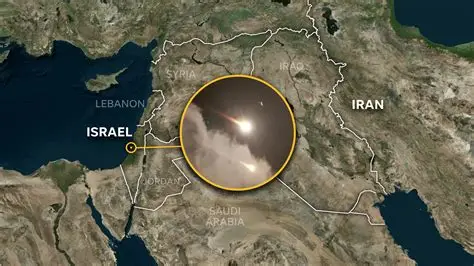
Analysts say the five-month war between the United States and Iran has entered a critical phase, with renewed missile and drone attacks raising fears that the conflict could expand to additional countries and further disrupt the global economy.
The latest escalation followed a brief pause in fighting, with the United States and Iran exchanging new barrages of missiles on Thursday. The renewed attacks have diminished hopes that diplomatic efforts could quickly end the conflict.
Arman Mahmoudian, a research fellow at the Global and National Security Institute at the University of South Florida, said the latest developments suggested the conflict was moving beyond what could be described as a controlled escalation.
“This is not a war that can fall into the category of managed escalations,” Mahmoudian said.
Jordan reported intercepting Iranian missiles for a second consecutive day, while Kuwait said a strike in the northern part of the country killed one person.
Other incidents have raised concerns about the widening geographic impact of the conflict. Saudi Arabia said it had come under fire from Iran-backed militias operating in Iraq, while fires were reported aboard two vessels at Egypt’s Damietta port after suspected drone strikes.
British maritime security company Ambrey said the drones struck a U.S.-owned floating storage facility and a Greek-owned natural gas tanker. No injuries were reported.
Egyptian authorities said initial investigations indicated that drones caused the fires, although responsibility for the attacks remained unclear. Yemen’s Houthi rebels denied involvement.
Egypt has remained one of the few major Middle Eastern countries to avoid direct military action during the conflict and has also played a role in regional diplomatic efforts. Any confirmed attack by Iran or an Iranian-linked group against Egyptian interests would represent a significant expansion of the war.
Ali Vaez, deputy programme director for the Middle East and North Africa at the International Crisis Group, said Iran could increasingly target new territories and strategic energy routes.
He pointed to attacks involving Jordan and growing pressure around regional maritime routes, including the Bab al-Mandab Strait and the Suez Canal, as signs that the conflict could increasingly threaten vital trade corridors.
The war, which President Donald Trump initially suggested could last four to five weeks, has instead continued for months, contributing to higher fuel prices and increased pressure on the global economy.
The prolonged fighting has also raised concerns about U.S. military stockpiles, with analysts warning that continued operations could put pressure on the weapons and defensive systems needed to protect American forces and allies in the region.
Mahmoudian said the conflict could attract additional actors, including countries that have not previously been directly involved.
The renewed fighting therefore threatens to transform the conflict from a bilateral confrontation into a broader regional war, particularly if strikes continue spreading to neighbouring countries and critical energy and shipping infrastructure.
Diplomatic efforts remain possible, but analysts say the latest exchange of missiles and drones has made the prospect of a rapid settlement increasingly uncertain.