

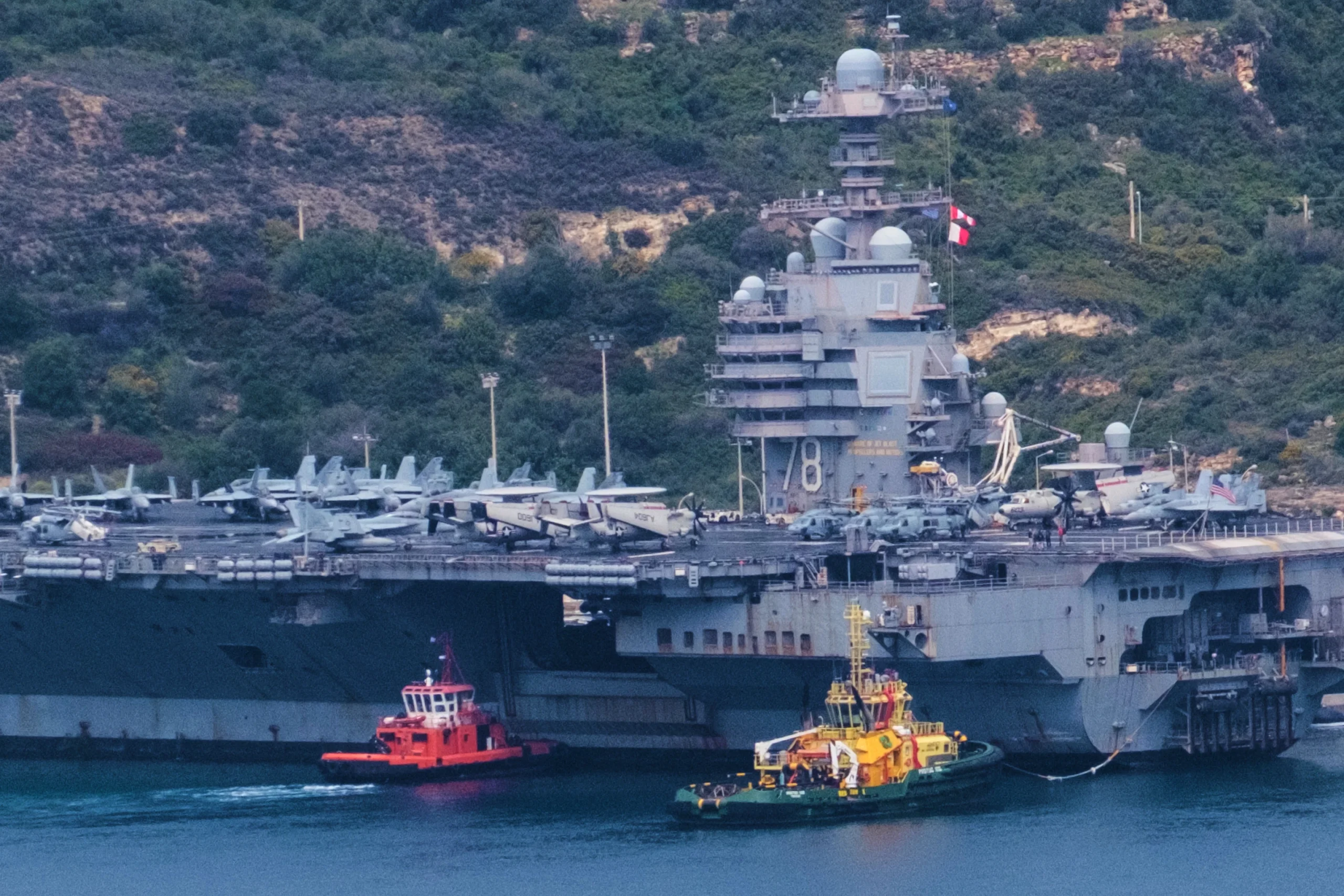
President Donald Trump has directed the U.S. Navy to remove the advanced electromagnetic aircraft launch system from its newest aircraft carriers and return to traditional steam-powered catapults, reviving a long-running dispute over the technology.
A directive issued Thursday orders the Pentagon and Navy to develop plans within two months to remove the Electromagnetic Aircraft Launch System (EMALS) from future Ford-class aircraft carriers. The directive also calls for the electromagnetic weapons elevators aboard the carriers to be replaced.
The decision is expected to involve significant costs and could require major redesign work on ships that were already being constructed around the newer technology.
Trump has opposed EMALS for years
Trump has criticized the electromagnetic launch system since at least his first presidential term, arguing that the traditional steam-powered system was more reliable and powerful.
The EMALS uses electromagnetic energy to accelerate aircraft from the carrier deck. It was designed to replace steam catapults and reduce the number of sailors needed to operate the system while improving launch performance.
Under Trump’s new directive, the USS Doris Miller, the fourth Ford-class carrier, would become the first carrier to receive the proposed changes.
The USS Gerald R. Ford, along with the forthcoming USS John F. Kennedy and USS Enterprise, would remain equipped with the electromagnetic system.
Manufacturer warns of cost and schedule risks
General Atomics, the company responsible for manufacturing EMALS, said the decision to abandon the system on the Doris Miller should be reconsidered.
The company said work on the carrier’s catapults and aircraft arresting equipment was already about halfway complete and warned that changing the design at this stage could create substantial cost, scheduling and integration problems.
The concerns are particularly significant because Trump’s own directive identifies repeated changes to Navy ship designs as one of the factors contributing to cost increases, delays and cancellations.
Navy faces manpower pressures
The decision also comes as the U.S. Navy continues to face difficulties maintaining adequate staffing levels aboard its warships.
EMALS requires substantially fewer sailors to operate than traditional steam catapults. On the USS Gerald R. Ford, the electromagnetic system reduced the number of personnel required to operate the catapults from roughly a dozen to two.
The Navy began the year with an estimated 20,000 unfilled positions across the fleet, although recruitment improved during the previous year.
The Navy has also promoted EMALS as an operational improvement, saying the system enables aircraft to be launched and recovered at a higher rate than on older Nimitz-class carriers.
China and France moving toward electromagnetic technology
Trump’s decision comes as other major military powers continue adopting electromagnetic launch technology.
China’s newest aircraft carriers use electromagnetic catapults, while France has announced plans to incorporate the technology into its next-generation aircraft carrier.
That has raised questions over whether reverting to steam technology could place the U.S. Navy on a different technological path from other advanced carrier fleets.
The proposed change also comes as Washington seeks additional funding for the Pentagon amid the ongoing Iran war and broader military spending plans.
Defense Secretary Pete Hegseth has estimated the cost of the war has reached tens of billions of dollars, while the administration has proposed a major increase in defense spending.
Congress will ultimately have to approve the funding required for the Navy’s broader shipbuilding and modernization plans.
The debate over EMALS therefore comes at a time when the United States is balancing technological modernization, shipbuilding costs, manpower shortages and increasing demands on its military forces.