

A partial solar eclipse will be visible across Finland on Wednesday, August 12, with the Moon expected to cover more than 80 percent of the Sun’s diameter at the height of the event.
According to Finland’s Astronomical Association Ursa, the eclipse will reach approximately 85 percent coverage in Kilpisjärvi in northwestern Finland and about 83 percent in Helsinki. The differences in visibility across the country will be relatively small.
The eclipse is expected to begin shortly before 8 p.m., depending on location, with the maximum phase occurring before 9 p.m.
In Helsinki, the eclipse will begin shortly after 8 p.m. and reach its peak at approximately 8:52 p.m., before sunset at around 9:23 p.m.
The event will occur while the Sun is already low over the west-northwestern horizon, making clear visibility dependent on local weather conditions as well as surrounding buildings, trees and hills.
Ursa said western and northern Finland are likely to offer the best viewing conditions. In southern and eastern parts of the country, the Sun will set before the eclipse has completely ended, although the maximum phase will occur while the Sun remains above the horizon throughout Finland.
North of an approximate line stretching from Kaskinen to Kuusamo, the Sun will remain above the horizon for the entire eclipse.
Deepest Finnish eclipse in more than a decade
Ursa said the August event will be the deepest solar eclipse visible from Finland in more than a decade.
The country last experienced a partial solar eclipse on March 29, 2025. The next partial eclipse visible from Finland will take place on August 2, 2027, although only southern parts of the country will see it, with the Moon covering roughly 20 percent of the Sun’s diameter.
The most recent total solar eclipse visible from Finland occurred in July 1990. The next total eclipse visible from the country is not expected until October 2126.
Public warned to protect eyes
Ursa has urged members of the public to take precautions when watching the eclipse.
Looking directly at the Sun without appropriate protection can cause serious retinal damage within seconds. Ordinary sunglasses are not sufficient for safe viewing.
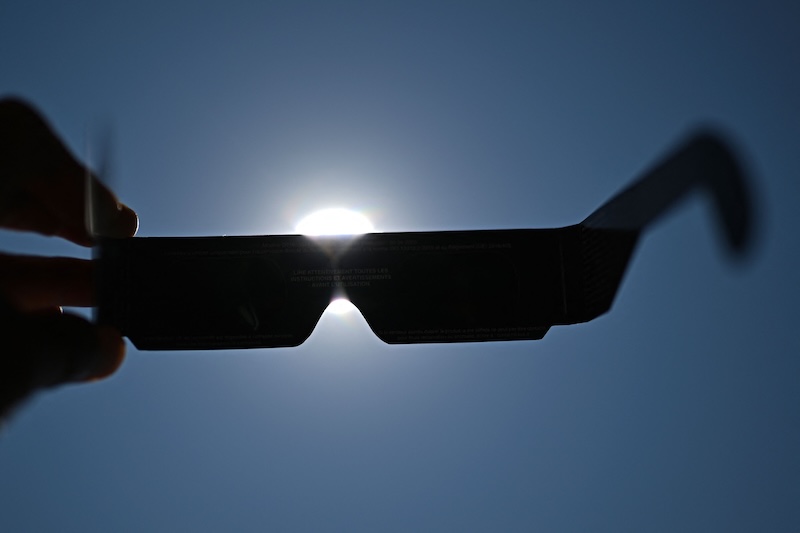
Purpose-made eclipse glasses can be used for direct observation, provided they are undamaged and designed for solar viewing.
Ursa also warned that cameras, binoculars and telescopes must be equipped with approved solar filters. Looking at the Sun through unfiltered optical equipment can cause severe eye damage because the lenses concentrate sunlight.
The Astronomical Association plans to observe the eclipse from its Kaivopuisto observatory in Helsinki, weather permitting, and said it intends to stream images online where possible.