


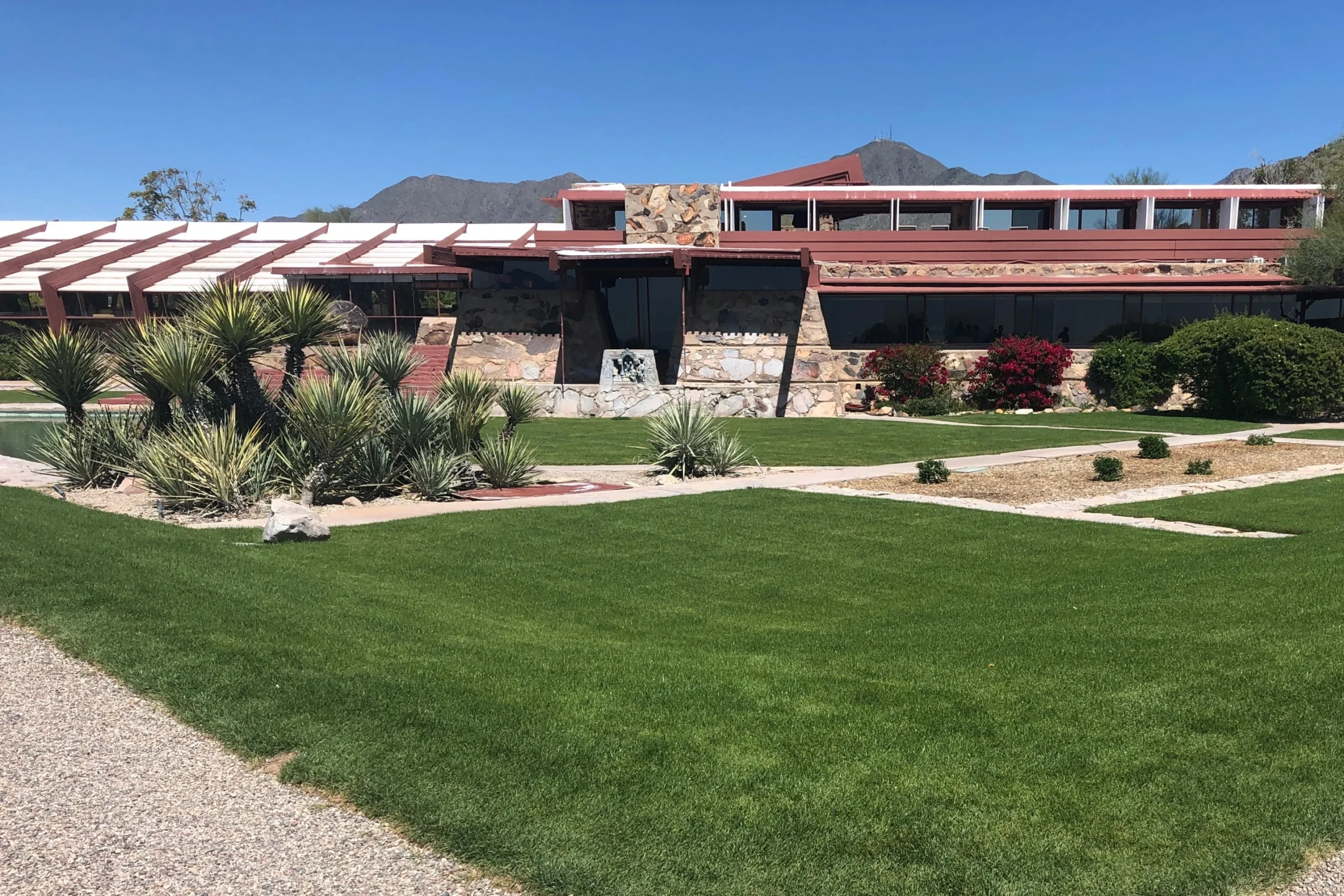
A historic desert property designed by renowned American architect Frank Lloyd Wright in Arizona remains temporarily closed following the death of a Brazilian visitor who was struck by a piece of roofing during high winds.
The incident occurred on Friday at Taliesin West, Wright’s former winter residence and architectural complex in Scottsdale, east of Phoenix, according to local police.
The victim, identified as Rogério Renato Mateucci, 55, was reportedly struck in the head by a piece of plexiglass roofing that was blown off by strong winds. Police spokesperson Sergeant Allison Sempsis said Mateucci died instantly.
The National Weather Service recorded wind gusts of up to 38 miles per hour (61 kilometres per hour) at Scottsdale Airport on the day of the incident.
Historic Site Remains Closed
Taliesin West remained closed to the public as of Wednesday following the fatal incident.
The Frank Lloyd Wright Foundation, which owns the property, announced after Mateucci’s death that the site would remain closed “until further notice.”
A foundation spokesperson had not responded by Wednesday to an inquiry about when public tours would resume.
However, Sempsis indicated that the ongoing police investigation would not, in itself, prevent the historic property from reopening.
The foundation expressed its condolences following the incident, stating on social media that it would not comment further while the police investigation remained active.
Brazilian University Official Identified as Victim
Mateucci was a senior administrator at the Pontifical Catholic University of Paraná, located in Curitiba, Brazil.
In a statement, the university described him as its rector and a lay member of the Catholic religious order of Marist priests and brothers. He was originally from São Paulo.
According to the university, Mateucci was visiting the United States to participate in an international programme at Arizona State University.
His death has drawn attention to the safety of visitors at historic architectural sites, particularly during periods of severe weather.
Taliesin West’s Architectural and Historical Significance
Built in 1937, Taliesin West is one of Wright’s best-known architectural projects. The property features low-profile roofs and rock walls designed to harmonise with the surrounding Arizona desert landscape.
The complex served as Wright’s winter home and as what the architect described as a “desert laboratory” for training and developing the ideas of his students.
The site is designated a UNESCO World Heritage property and attracts up to 100,000 visitors annually, according to the Frank Lloyd Wright Foundation.
Its architectural significance and distinctive desert setting have made it a major destination for architecture enthusiasts, students and tourists from around the world.
Investigation Continues
Authorities have not indicated when the investigation into the fatal roofing incident will be completed.
The foundation has yet to announce a reopening date, leaving tours and public visits suspended while the situation is assessed.
The incident has also raised concerns about the potential risks posed by strong winds to structures at historic sites, particularly those incorporating distinctive architectural materials and designs.
For now, Taliesin West remains closed as authorities continue their investigation into the circumstances surrounding Mateucci’s death.

