

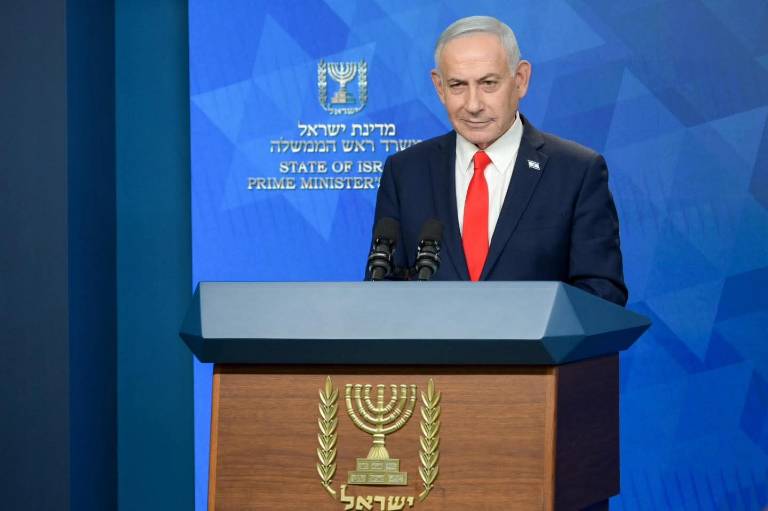
Israeli Prime Minister Benjamin Netanyahu has reaffirmed his commitment to preventing Iran from acquiring nuclear weapons, declaring that Israel’s recent military operations had removed what he described as an immediate existential threat to the country.
Speaking at a press conference in Jerusalem on Monday, Netanyahu said stopping Iran’s nuclear ambitions had been the defining mission of his political career and pledged that Tehran would never be allowed to develop atomic weapons while he remained prime minister.
“For decades, I have been fighting against Iran’s efforts to arm itself with nuclear weapons,” Netanyahu said. “With an agreement, without an agreement – Iran will not have nuclear weapons.”
The Israeli leader defended the country’s military operations against Iran, saying Israel, together with the United States, had carried out what he described as the largest offensive air campaign in the nation’s history.
According to Netanyahu, Israeli and American forces targeted nuclear facilities, missile production infrastructure, military industries, senior commanders and scientists linked to Iran’s military and nuclear programmes. He claimed the operations caused extensive economic and military damage to Iran and significantly delayed its nuclear ambitions.
Netanyahu argued that the military campaign prevented what he called a direct threat of “nuclear annihilation” against Israel, alleging that Iran had been accelerating efforts to develop nuclear weapons and move key facilities underground before the operations were launched.
The prime minister also insisted that Israel’s security challenges were far from over, stressing the need for continued vigilance against Iran and its regional allies.
He highlighted Israeli military operations across Gaza, Lebanon, Syria, Yemen and the West Bank, claiming that Israeli forces had dismantled major terrorist infrastructures and weakened groups aligned with Tehran.
Netanyahu further stated that Israel had succeeded in recovering all hostages held in Gaza and had eliminated several senior militant leaders during the course of the conflict.
The Israeli leader said his government had also established what he described as security zones around Israel’s borders to prevent future attacks and infiltration attempts by armed groups.
“Israel will not allow terror organizations to encamp on our borders,” he said, adding that Israeli forces would remain in strategic areas for as long as necessary to guarantee national security.
Netanyahu credited the military campaigns with reshaping Israel’s security doctrine, saying the country had shifted from a defensive posture to one focused on initiative, deterrence and pre-emptive action.
He also outlined plans to strengthen Israel’s defence capabilities through increased domestic weapons production and technological development, saying the government would invest heavily in military self-reliance.
Looking ahead, Netanyahu said Israel would continue building regional and international partnerships while maintaining pressure on threats to its security.
The prime minister concluded by thanking Israeli citizens, military personnel and security agencies for their support and resilience throughout the conflicts, expressing confidence in Israel’s future security and strength.