
Concerns are growing over the sugar content in infant cereals sold in parts of Africa and other regions of the Global South, following reports that some versions of baby food contain significantly higher levels of added sugar than similar products sold in Europe.
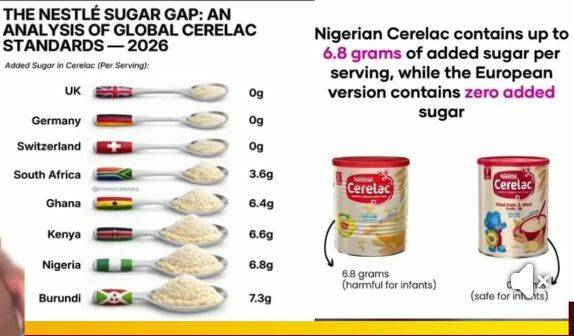
The product at the center of the debate is Cerelac, manufactured by the multinational food company Nestlé. Comparisons circulating online and in consumer advocacy discussions suggest that Cerelac products sold in several African countries contain measurable amounts of added sugar per serving, while versions sold in parts of Europe reportedly contain none.
Data highlighted in the comparison indicates that Cerelac products in countries such as Ghana, Kenya and Nigeria may contain between 6 and nearly 7 grams of added sugar per serving, while similar products in United Kingdom, Germany and Switzerland are reported to contain zero added sugar.
Health advocates say excessive sugar consumption during infancy can increase the risk of childhood obesity, tooth decay and long-term health complications. Nutrition experts also warn that introducing sweetened foods early may shape long-term dietary preferences in children.
The discussion has reignited debate over global food standards and whether multinational companies apply different nutritional formulations depending on regional markets. Critics argue that products marketed for infants in developing regions should meet the same health standards applied in wealthier markets.
Nestlé has previously stated that its products comply with local regulations and nutritional guidelines in the countries where they are sold. The company has also said it continues to review and improve product formulations as part of broader commitments to nutrition and public health.
Public health advocates are calling for greater transparency in labeling and stricter international guidelines for foods marketed to infants and young children, particularly in regions where regulatory oversight may vary.