

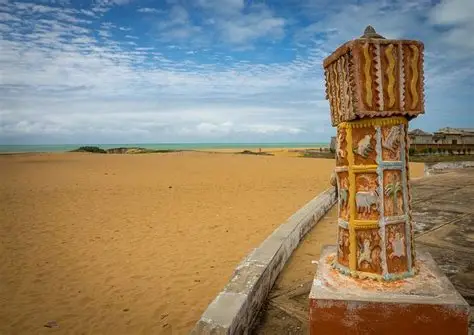
Tourists have been gathering at the historic Door of No Return in southern Benin as the country continues efforts to promote heritage tourism rooted in its complex history.
The monument, located in the coastal town of Ouidah, commemorates the thousands of Africans who were forced onto slave ships bound for the Americas during the transatlantic slave trade. Standing nearly 17 metres tall on the seafront, the restored archway has become a major attraction for visitors exploring the region’s historical landmarks.
Ouidah was once one of the key departure points for enslaved Africans during the slave trade. Today, authorities are working to transform the area into a destination that educates visitors while highlighting the country’s culture and heritage.
The monument’s ochre-and-gold facade features carvings depicting enslaved people walking toward the sea in chains, symbolizing the painful journeys taken from the West African coast. Nearby, a life-size replica of the historic slave ship L’Aurore is being developed into an immersive museum that will recount the history of the slave trade and the experiences of those who were forced aboard such vessels.
Visitors say the site serves as an important reminder of African history and identity. Many tourists, including those from neighboring countries, come to witness the landmark and learn about the region’s past.
Beyond the slave trade memorial, cultural tourism in Ouidah also includes visits to the Python Temple, a centuries-old site linked to the traditional Vodun belief system. Guides at the temple explain the spiritual significance of pythons in local culture while visitors learn about the traditions that originated in the region.
Benin, widely regarded as the birthplace of Vodun, now hosts the annual Vodun Days festival, which features traditional ceremonies, dances and mask parades. The event has become a major attraction and this year reportedly drew around two million visitors, many of them local residents.
The government has invested heavily in infrastructure and tourism projects in recent years, including road improvements, hotel renovations and simplified visa procedures aimed at attracting international visitors. A new resort development is also planned to open in 2027 as part of the broader strategy.
Officials say the goal is to increase tourism’s contribution to the national economy from about six percent to as much as 15 percent of gross domestic product within the next decade.
In the capital Cotonou, another symbol of national pride has emerged in the form of the towering Amazon Monument, a 30-metre statue honoring the legendary female warriors of the Dahomey Kingdom. The monument has quickly become a popular destination for visitors and locals alike.
The tourism initiatives come as Benin holds a presidential election to select a successor to outgoing leader Patrice Talon, whose administration has championed the country’s cultural heritage projects. Finance Minister Romuald Wadagni is widely viewed as the frontrunner and has pledged to continue the tourism development strategy.
Authorities say the effort to promote heritage tourism is not only aimed at boosting the economy but also at reconnecting Africans and the global diaspora with a defining chapter of the continent’s history.