

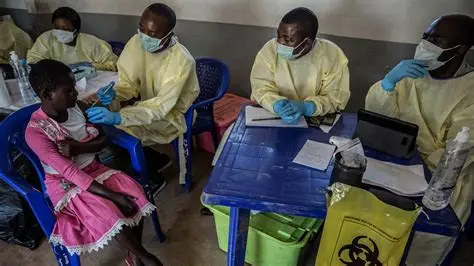
The World Health Organization (WHO) has warned that the Ebola outbreak in the Democratic Republic of Congo is spreading at an unprecedented pace and could surpass the devastating West African epidemic of 2014–2016.
WHO Director-General Dr Tedros Adhanom Ghebreyesus issued the warning after returning from a visit to the DR Congo, where he met President Félix Tshisekedi and praised the government’s efforts to contain the outbreak.
Despite those efforts, Tedros said the response remains insufficient as the epidemic continues to expand across the country.
According to the WHO chief, 4,449 confirmed Ebola cases and 2,061 deaths have been reported across five provinces and 53 health zones.
“It is already the second-biggest Ebola epidemic on record, and it is moving faster than any previous Ebola outbreak,” Tedros said.
He warned that, at its current rate of transmission, the outbreak could overtake the West African Ebola crisis that killed thousands of people between 2014 and 2016.
Community deaths raise alarm
One of the biggest concerns for health authorities is the number of people dying outside Ebola treatment centres and without appearing on known contact lists.
Tedros said this indicates that health officials may be missing chains of transmission, making it harder to identify and isolate people who have been exposed to the virus.
“Most concerningly, we see a high proportion of deaths in communities instead of treatment units, outside of known contact lists,” he said.
“That tells us there are chains of transmission we don’t know about, and until we know about – and break – every chain of transmission, we will not stop the outbreak.”
Health authorities are particularly concerned about areas without dedicated treatment facilities, where patients may die before receiving specialised care and where contact tracing is more difficult.
WHO calls for stronger response
The outbreak is being driven by the Bundibugyo ebolavirus, according to the information provided by the WHO chief.
The rapid spread has placed additional pressure on health workers and response teams operating in areas already facing significant humanitarian and security challenges.
Tedros praised President Tshisekedi and Congolese authorities for their efforts but stressed that a much stronger response is required to identify hidden transmission chains and prevent further deaths.
The warning comes as international health agencies intensify efforts to contain the outbreak and prevent it from developing into a crisis comparable to the West African Ebola epidemic.
The 2014–2016 outbreak, which primarily affected Guinea, Liberia and Sierra Leone, became the largest Ebola epidemic ever recorded at the time.
Health officials say breaking unidentified transmission chains, strengthening community surveillance and ensuring patients can access treatment quickly will be critical to preventing the current outbreak from reaching an even greater scale.