

A Nigerian defendant who recently suffered a stroke was brought before a court on Thursday, as his legal team sought bail on compassionate grounds, in a case unfolding amid heightened diplomatic engagement between Nigeria and the United States over Washington’s designation of the country for alleged religious freedom violations.
Defense counsel Ibrahim Angulu filed two applications before the court, one challenging what he described as duplicate charges and another requesting bail for the first defendant due to his deteriorating health.
“As you can see, the first defendant has suffered a stroke. So, on compassionate grounds, we are asking the court to allow him to be treated in a hospital instead of just lying in prison,” Angulu told the court.
The court adjourned the matter after hearing arguments from the defense, with a ruling on the bail application expected at a later date.
US Blacklist Fuels Diplomatic Talks
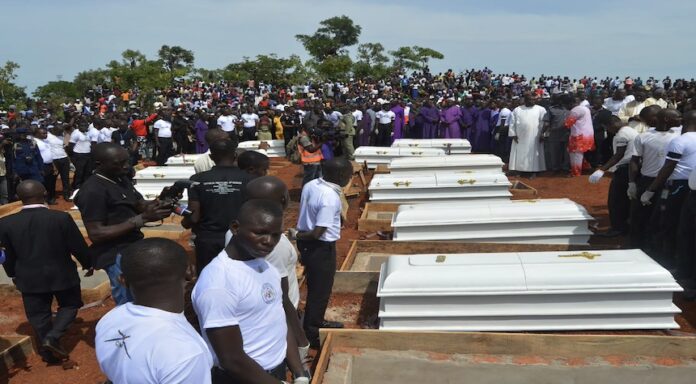
The case comes at a sensitive moment in bilateral relations, as a US–Nigeria joint working group convenes following Washington’s designation of Nigeria as a “Country of Particular Concern” over alleged violations of religious freedom.
US officials have framed the move around concerns of Christian persecution, a characterization rejected by Abuja and several analysts, who argue the violence stems from broader insecurity and the state’s struggle to contain armed groups affecting communities of different faiths.
After talks in January, US State Department official Allison Hooker said Nigeria “must do more to protect Christians,” without reference to Muslim victims of the same violence.
Diverging Views in Washington
Nigeria’s government, led by President Bola Tinubu, has sought to turn diplomatic pressure into expanded security cooperation, including increased military collaboration, US-backed training initiatives and reported support for operations against armed groups in the country’s northwest.
However, skepticism remains among some US lawmakers. Congressman Chris Smith accused Nigerian authorities of maintaining a “culture of denial” regarding the scale of violence. Earlier this month, Smith declined an invitation to a dinner hosted by First Lady Remi Tinubu, dismissing it as a “photo op.”
As legal proceedings continue in Abuja, observers say the courtroom developments and diplomatic negotiations underscore the complex intersection of domestic justice, human rights concerns and international pressure shaping US–Nigeria relations.