


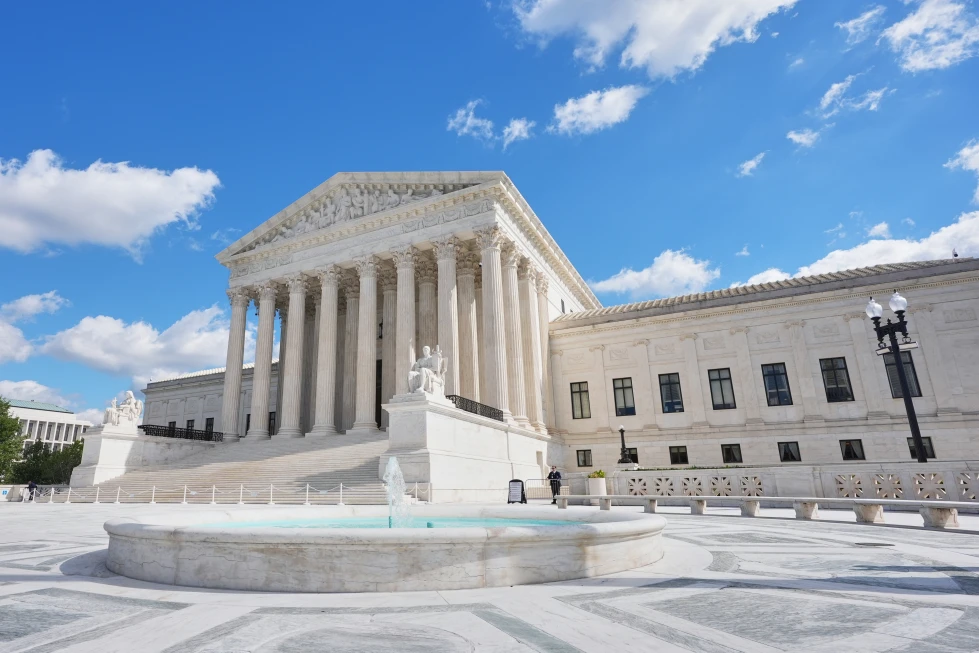
The United States Supreme Court has agreed to examine whether Congress had the constitutional authority to prohibit the distillation of spirits in private homes under a federal law enacted more than 150 years ago.
The case challenges an 1868 prohibition on home distilling, which plaintiffs argue is an outdated measure introduced during the Reconstruction era as part of efforts to prevent tax fraud among commercial alcohol producers.
The dispute centres on the extent of Congress’ constitutional taxing powers and whether the federal government can prohibit individuals from distilling spirits in their own homes for personal consumption.
Under current federal law, unauthorised home distilling is a criminal offence punishable by up to five years in prison and a fine of $10,000.
Conflicting Court Decisions Prompt Supreme Court Review
The Supreme Court’s decision to hear the case follows conflicting rulings from two federal appeals courts, which reached opposing conclusions in April.
A three-judge panel of the Sixth US Circuit Court of Appeals upheld the federal prohibition in a case brought by John Ream, a brewpub owner from Newark, Ohio, who wants to distil whisky at home for personal use.
However, a panel of the Fifth US Circuit Court of Appeals ruled in favour of members of the Texas-based Hobby Distillers Association, concluding that Congress’ constitutional taxing powers did not justify the statutory prohibition on distilling spirits inside private homes.
The Supreme Court has agreed to review the Fifth Circuit’s decision, a course of action preferred by the US Justice Department.
The conflicting judgments have raised questions about the limits of federal authority and the constitutional rights of individuals to engage in activities within their homes.
Plaintiffs Challenge Federal Government’s Authority
Lawyers representing the challengers argue that Congress exceeded its constitutional authority when it introduced the prohibition as part of a tax reform measure intended to curb fraud by commercial distillers.
They contend that the law has become an outdated restriction that unnecessarily limits private activity.
Ream’s legal team has warned that the government’s interpretation could potentially justify federal restrictions on a broad range of activities conducted inside private homes, including cooking, gardening and remote work.
“The importance of this case and the questions it presents could hardly be overstated,” Ream’s lawyers wrote in their petition to the Supreme Court, describing the dispute as a fundamental test of federal power and the rights reserved to states and individuals.
The challengers maintain that Congress’ authority to impose and collect taxes does not automatically give it unlimited power to prohibit private distilling.
Justice Department Defends the Ban
The Justice Department has urged the Supreme Court to uphold the federal government’s authority to regulate the production of distilled spirits.
Government lawyers argue that federal oversight of alcohol production and taxation dates back to the earliest years of Congress and that the home-distilling prohibition was introduced to prevent producers from avoiding federal excise taxes and government inspections.
According to the government, the restrictions were developed in response to a history of tax evasion involving distilled spirits and should not be treated as an arbitrary limitation on private activity.
Government attorneys have also warned that overturning the prohibition could undermine established Supreme Court precedent and weaken Congress’ authority to enforce federal tax laws.
The Justice Department has urged the court to focus on the legal questions presented in the case it has agreed to review, rather than addressing a separate argument concerning Congress’ power to regulate interstate commerce.
A Decision With Broader Constitutional Implications
The Supreme Court’s eventual ruling could clarify the boundaries between federal taxing authority, state powers and individual freedoms within private homes.
A decision against the government could weaken the legal foundation of the longstanding federal prohibition and potentially allow individuals to distil spirits at home, subject to any other applicable laws and regulations.
Conversely, a ruling in favour of the government would preserve the existing restriction and reinforce Congress’ authority to regulate the location of distilled-spirit production as part of federal tax enforcement.
The case is expected to draw attention from home-distilling enthusiasts, alcohol industry stakeholders and constitutional law experts as the court considers the scope of a law that has remained in place since the 19th century.

