

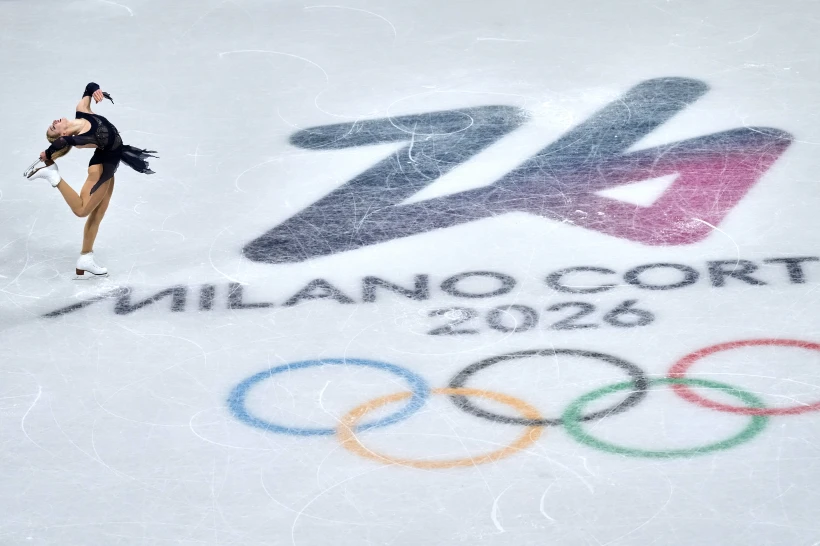
Milan, Italy — As the women’s figure skating final takes center stage Tuesday night at the Milan Cortina Games, three American athletes are challenging long-held stereotypes while carrying U.S. hopes for Olympic gold.
Gone is the singular image of the fragile “ice princess.” In its place stands a trio as diverse in personality as in style Amber Glenn, Alysa Liu, and Isabeau Levito collectively embracing the nickname “Blade Angels,” a self-chosen moniker reflecting both confidence and camaraderie.
Together, they represent not only a generational shift in American figure skating but also the country’s last realistic opportunity to salvage a challenging Olympic campaign in the sport.
A veteran voice and activist presence
At 26, Glenn is the oldest of the trio and the reigning three-time U.S. champion, a rarity in a discipline long dominated by teenagers. Raised in Plano, Texas, Glenn’s career arc defied convention, peaking after years of personal struggle that included mental health challenges, an eating disorder, and navigating her identity as a pansexual woman.
Outspoken and unapologetic, Glenn has also drawn attention for her public stance on LGBTQ+ rights, including remarks on the political climate under Donald Trump.
“I hope I can use my platform and voice throughout these Games to help people stay strong during these hard times,” she said earlier in the competition, dismissing criticism that athletes should avoid political discourse.
Her journey has already yielded an Olympic team gold medal, and now she seeks individual glory on the sport’s biggest stage.
A prodigy reborn
Liu’s presence in Milan is one of the most remarkable comeback stories in recent Olympic history. A former prodigy who stunned the skating world as a young teenager, Liu walked away from the sport at 16 after finishing sixth at the Beijing Games, burned out by pressure, fame, and expectations.
“I really hated skating when I quit,” Liu said, recalling a period when she wanted nothing to do with competitions or public life.
Time away proved transformative. Liu explored the world, climbed to Everest base camp, and enrolled at University of California, Los Angeles to study psychology. When she returned to skating, it was on her own terms a decision that culminated in the first world title for an American woman since Kimmie Meissner in 2006.
Her bold personal style and symbolic striped hair have made the 20-year-old an icon for a new, alternative fan base and a serious contender for Olympic gold.
Beneath the ice-princess image
At 18, Levito may appear closest to the traditional mold once embodied by champions like Tara Lipinski and Sarah Hughes. Graceful and composed on camera, she carries a polished aesthetic inspired in part by her idol Evgenia Medvedeva.
Yet away from the spotlight, Levito’s sharp humor and sarcasm reveal a far more complex personality. The contrast, she admits, is deliberate.
“There’s definitely an image,” Levito said. “People don’t really know what you’re actually like.”
With family roots in Milan through her mother and grandmother, Levito competes on emotionally meaningful ice and with a determination to show she is more than appearances.
A new generation, a shared goal
Despite their differences, the three skaters share a sense of purpose and mutual respect.
“I really like that we’re all different,” Levito said. “We all have our own strengths and personalities, and our own ways we want to look and appear.”
As the women’s final approaches, the “Blade Angels” symbolize a broader evolution in figure skating one where authenticity, resilience, and individuality matter as much as artistry and jumps. For American fans, they also represent hope: that a new kind of role model can still deliver gold on Olympic ice.