

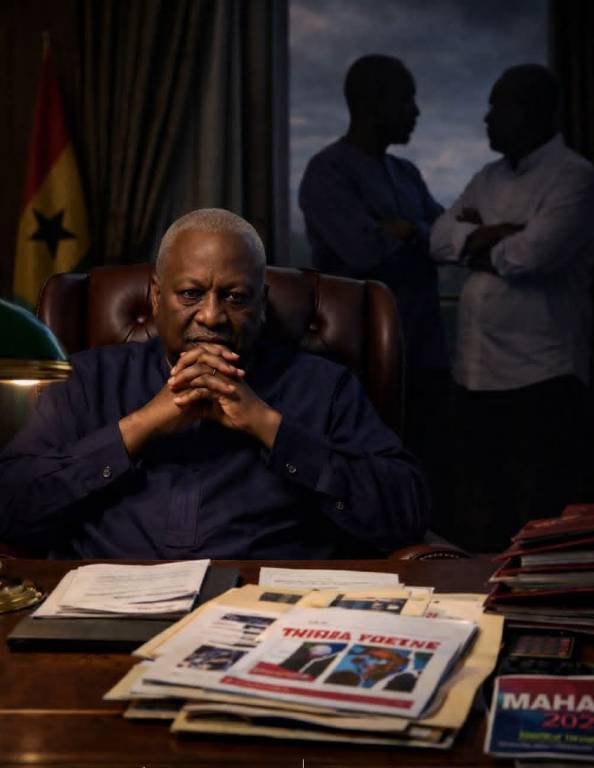
Fresh tensions have emerged within Ghana’s opposition National Democratic Congress (NDC) after new internal party rules effectively shut the door on any immediate bid by former President John Dramani Mahama to consolidate control of the party ahead of a possible third-term ambition.
At the center of the dispute is a recently adopted clause governing internal party elections, which requires holders of government appointments to resign at least six months before picking up nomination forms to contest party positions. The rule, approved quietly during internal reforms, has dramatically altered the balance of power within the party.
Political analysts say the change primarily affects individuals aligned with Mahama who currently hold ministerial or other government-linked positions and were expected to contest key party roles or mobilize support to reshape the NDC’s executive leadership. Faced with the prospect of resigning from their posts without certainty of success, many are now effectively sidelined from the party’s upcoming internal contests.
The move has been widely interpreted as a strategic maneuver by the party’s entrenched leadership, including National Chairman Johnson Asiedu Nketia and General Secretary Fiifi Kwetey, both of whom hold party rather than government positions and are therefore unaffected by the rule.
Observers describe the development not as an open confrontation, but as a procedural showdown, with the party’s existing leadership using internal regulations to preserve control of the NDC’s “engine room.” By doing so, they have significantly weakened Mahama’s ability to reorganize the party machinery in his favor.
Mahama, who led the NDC in the 2024 elections and remains its most prominent national figure, has not publicly declared any intention to seek a third term. However, speculation has persisted that he would need to first neutralize internal opposition within the party to secure such a path.
The NDC has publicly played down talk of a leadership crisis, insisting the rule changes are part of broader reforms aimed at strengthening internal democracy and fairness. Nonetheless, the fallout has exposed deep ideological and generational divides within the party, rooted in its revolutionary origins and evolving political identity.
With internal elections approaching and national elections still years away, analysts say the immediate leadership struggle may be settled, but the longer battle for influence within the NDC is far from over. The outcome could shape the party’s direction and leadership choices heading toward the 2028 polls.