

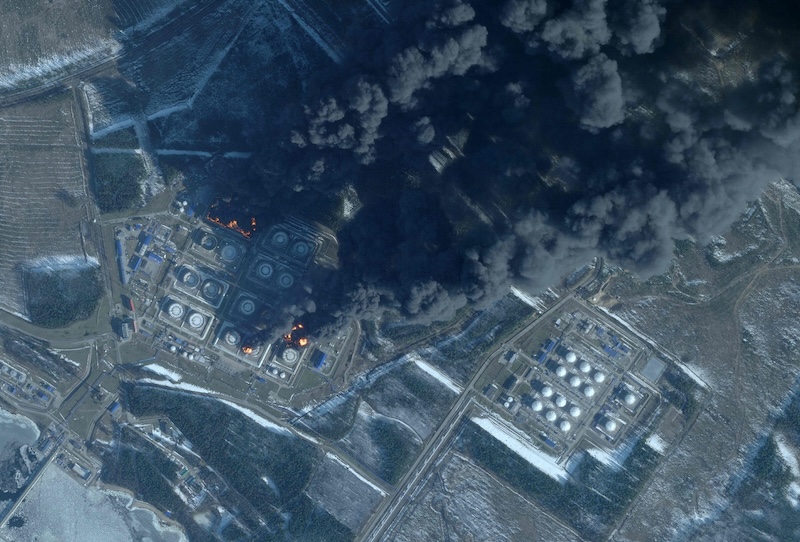
A wave of Ukrainian drone attacks targeting Russian energy infrastructure near the Gulf of Finland has significantly disrupted oil exports, halted port operations, and caused wider logistical challenges across the region.
According to Russian authorities, at least 18 drones were intercepted overnight during a three-hour alert over the Leningrad region, with Governor Aleksandr Drozdenko stating that no casualties were recorded in the latest round of strikes.
The attacks follow earlier hits on key oil facilities, including ports in Ust-Luga and Primorsk, as well as infrastructure in Vyborg and Kronstadt. Ukraine has also targeted the Kinef refinery in Kirishi, one of Russia’s largest oil processing plants—reportedly damaging critical components.
The sustained strikes have had a notable impact on Russia’s oil exports. Reports indicate that up to 40 percent of export capacity was disrupted earlier in the week, with tanker movements through the Gulf of Finland falling sharply. Only a handful of vessels have departed in recent days, compared to normal daily traffic of several tankers.
Dozens of ships are now reportedly stranded at sea, many awaiting access to affected ports such as Ust-Luga, where loading operations have been suspended. Analysts describe the disruption as one of the most severe interruptions to Russian oil flows in recent history.
Russia’s pipeline operator, Transneft, has begun efforts to reroute exports through alternative ports, though the effectiveness of these measures remains uncertain.
The situation has also drawn attention from neighboring Finland, where smoke from fires at oil terminals has been observed in southeastern regions. Finnish Defense Forces have heightened surveillance and operational readiness, citing the need to monitor potential security risks, including unauthorized drone activity.
Additionally, the Finnish Border Guard has raised concerns about the risk of oil spills in the Gulf of Finland, preparing contingency measures as tanker congestion increases.
The escalation underscores the broader impact of the ongoing conflict between Ukraine and Russia, with energy infrastructure increasingly becoming a focal point in the confrontation.