

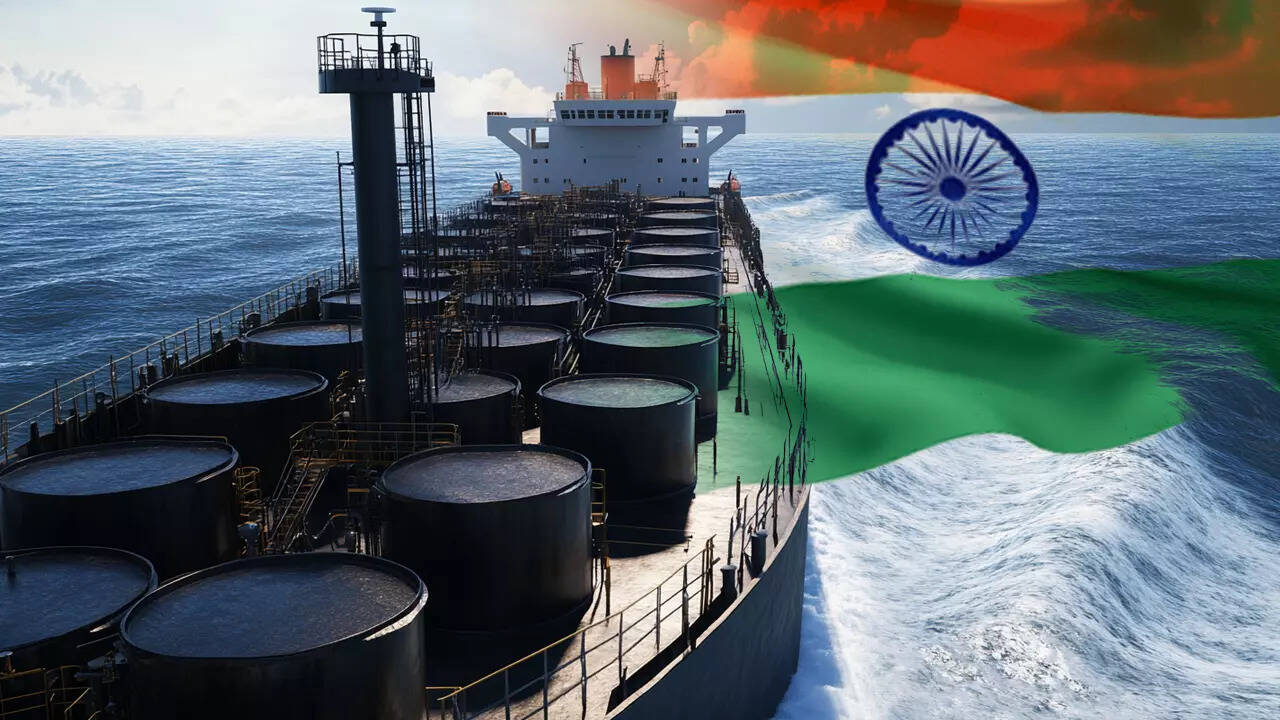
U.S. President Donald Trump has sharply criticised allied nations for failing to support the United States in its ongoing war with Iran, declaring that it is not America’s responsibility to secure the strategically vital Strait of Hormuz.
Speaking on Tuesday, Trump said countries that depend on the waterway for oil supplies should take responsibility for keeping it open, after Iran moved to close the narrow passage that links the Persian Gulf to global shipping routes. Nearly one-fifth of the world’s oil typically passes through the strait during peacetime.
The president suggested that the U.S. military offensive against Iran could conclude within two to three weeks and indicated Washington would not remain responsible for safeguarding the waterway once operations end. He also blamed allies for failing to support the war effort, urging them to defend their own energy interests.
The White House said Trump will address the nation in a prime-time speech on Wednesday to update the public on the war’s progress.
Oil markets shaken by conflict
The closure of the Strait of Hormuz has sent shockwaves through global energy markets. Average fuel prices in the United States have surged beyond four dollars per gallon, while the international benchmark Brent crude has climbed to around $107 per barrel more than 45 percent higher since the war began on February 28.
U.S. military strikes reportedly hit the central Iranian city of Isfahan, producing large explosions, while Tehran was accused of attacking a fully loaded Kuwaiti oil tanker in the Persian Gulf.
Allies reluctant to join conflict
Several European allies have resisted involvement in the conflict, highlighting widening divisions within the Western alliance. Spain has reportedly closed its airspace to U.S. aircraft linked to the war, while Italy declined to allow certain military operations to use the Sigonella air base in Sicily.
The dispute has also drawn in France, which Trump criticised after restrictions were placed on aircraft transporting supplies to Israel.
War expands across the region
The conflict, launched jointly by the United States and Israel against Iran, has now lasted more than a month and continues to escalate across the Middle East. The Israeli military said it carried out strikes in Beirut, targeting leaders of the militant group Hezbollah.
Meanwhile, another U.S. aircraft carrier, the USS George H. W. Bush, has deployed from Norfolk, Virginia, to the Middle East, joining other naval forces already positioned in the region.
Casualty figures continue to mount across several countries. Iranian authorities report more than 1,900 deaths since the conflict began, while casualties have also been recorded in Israel, Lebanon, Gulf states and the occupied West Bank. In Lebanon alone, more than 1,200 people have reportedly been killed and over one million displaced.
The war has also affected global security and energy markets, intensifying fears of prolonged instability across the Middle East and a potential worldwide economic ripple effect.