

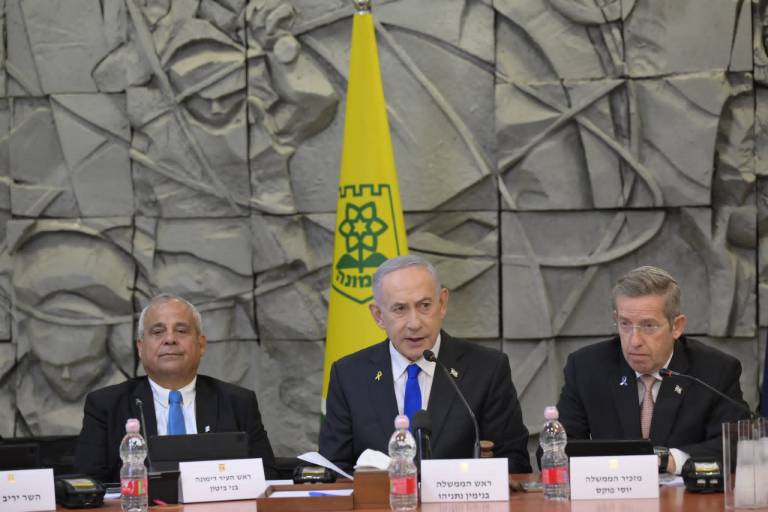
Prime Minister Benjamin Netanyahu has reaffirmed Israel’s commitment to decisive military action against any violations of the ceasefire with Hamas, following the killing of senior Hamas operative Raad Saad, whom Israeli authorities describe as a central architect of the October 7 attacks.
Speaking at a special government meeting in Dimona, Netanyahu said the operation was carried out on his directive and that of Defense Minister Israel Katz. He identified Saad as a key figure behind Hamas’s military buildup in Gaza and a leading planner of what he called the “Jericho Wall” extermination plan.
According to the prime minister, Saad was responsible for coordinating attacks against Israeli forces, smuggling weapons into the Gaza Strip, and rebuilding Hamas’s military capabilities in direct violation of commitments made under a U.S.-backed ceasefire framework.
“In English, we speak of demilitarization — he was conducting remilitarization,” Netanyahu said, accusing Hamas of reorganizing and rearming while publicly claiming adherence to ceasefire terms.
Netanyahu warned that Israel would not tolerate what he described as systematic breaches of the agreement. He said anyone involved in directing or organizing attacks against Israel would remain a target, aligning Israel’s position with statements made earlier by U.S. Secretary of Defense Pete Hegseth.
“Our policy is clear, forceful, and independent,” Netanyahu said. “We decide on the actions and the responses needed to ensure the security of Israel and our soldiers.”
The prime minister also addressed efforts to recover the remains of Ran Gvili, an Israeli described as a national hero, saying Israel is actively working through multiple channels, including engagements in Cairo and other locations, as the first phase of the current process nears completion.
Shifting to economic matters, Netanyahu highlighted recent international recognition of Israel’s economy. He cited The Economist magazine, which ranked Israel’s economy as the third-best globally in terms of positive year-on-year change, despite the ongoing conflict.
He attributed the performance to what he called firm and coordinated economic management, praising Finance Minister Bezalel Smotrich and the broader cabinet for their teamwork.
Netanyahu also outlined the government’s long-term development strategy for Dimona and the wider Negev region, referencing Israel’s founding vision to develop the south. He said progress is now being driven by investments in transportation, national infrastructure, and private-sector initiatives, which together are reshaping the region’s growth trajectory.