

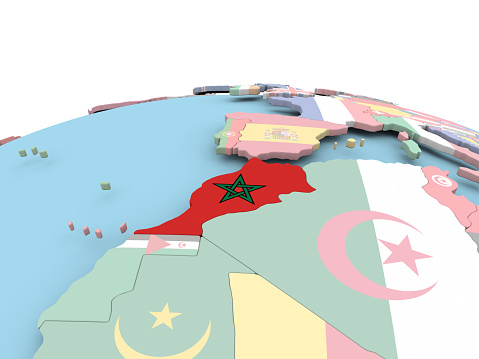
Morocco will permanently return to Greenwich Mean Time (GMT) at the end of September, reversing a policy introduced eight years ago that kept the country on GMT+1 for most of the year.
Prime Minister Aziz Akhannouch announced the decision on Thursday, saying the government was responding to widespread public demand ahead of the country’s upcoming legislative elections.
Morocco adopted permanent GMT+1 in 2018, with the exception of the holy month of Ramadan, when clocks were temporarily moved back to GMT. The policy was intended to better align the country’s business hours with major European trading partners, particularly France and Spain.
Under the new decision, Morocco will return to GMT as its official legal time, restoring the time standard established under King Hassan II in 1967.
The GMT+1 policy has remained one of the country’s most debated administrative reforms, with many Moroccans arguing that it disrupted daily life, particularly during winter months when children travelled to school before sunrise and workers began their day in darkness.
Critics also maintained that the time change negatively affected family routines, school schedules and overall work-life balance.
Public opposition to the policy gained momentum over the years, culminating in a viral petition that attracted hundreds of thousands of signatures calling for the government to abandon permanent daylight saving time.
The government has not yet announced the exact date the change will take effect at the end of September, but officials say Morocco will thereafter remain on Greenwich Mean Time throughout the year.