

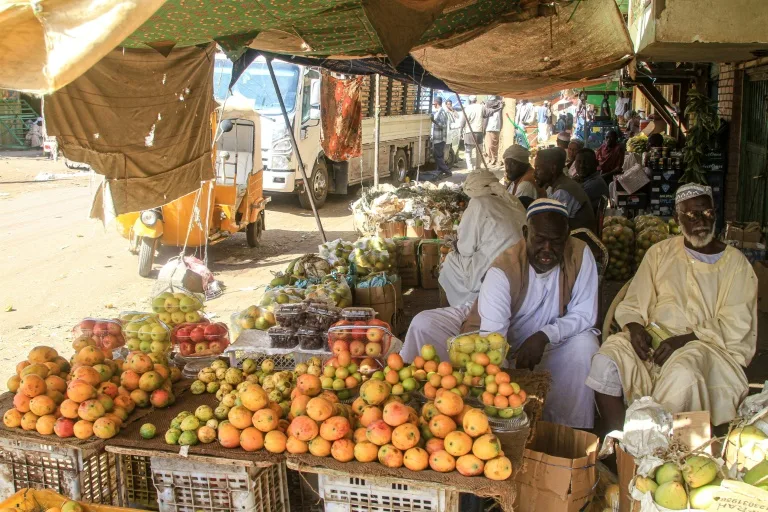
Activity is gradually returning to the central market in downtown Khartoum after the Sudanese army regained control of the capital, pushing out the paramilitary Rapid Support Forces following months of intense fighting.
Clashes erupted in the heart of the city in April 2023, paralyzing commerce and daily life as battles raged between the two sides. Vendors say conditions have improved since the army-led offensive last March forced the RSF out of central Khartoum, allowing markets to reopen and some normalcy to return.
Yet traders stress that recovery remains fragile.
“Prices are somewhat high due to the difficulty of bringing produce to the market,” said vendor Hashim Mohamed. He explained that insecurity and high transportation costs from farms and supply points continue to drive up prices. “If transportation fees were reduced and security on the roads increased, prices would decrease.”
While Khartoum has avoided the threat of mass starvation seen in frontline cities and displacement camps elsewhere in Sudan, the broader economic picture remains bleak. The conflict has devastated the economy, with the currency plunging from about 570 Sudanese pounds to the U.S. dollar before the war to roughly 3,500 in 2026.
Market vendor Adam Hammad said traders are struggling with shortages of workers and cash flow. “We suffer from a lack of resources, a shortage of employees, and a lack of financial liquidity entering the market,” he said. “The market is not what it used to be, but overall, it is better than it was when the Rapid Support Forces took control.”
The war has killed tens of thousands of people and displaced millions across the country. The United Nations has described the conflict as triggering the world’s worst humanitarian crisis, with vast needs continuing despite localized improvements in security.
For Khartoum’s traders, the reopening of the central market offers cautious hope — but they say lasting recovery will depend on stability, improved security on supply routes and a functioning economy.