

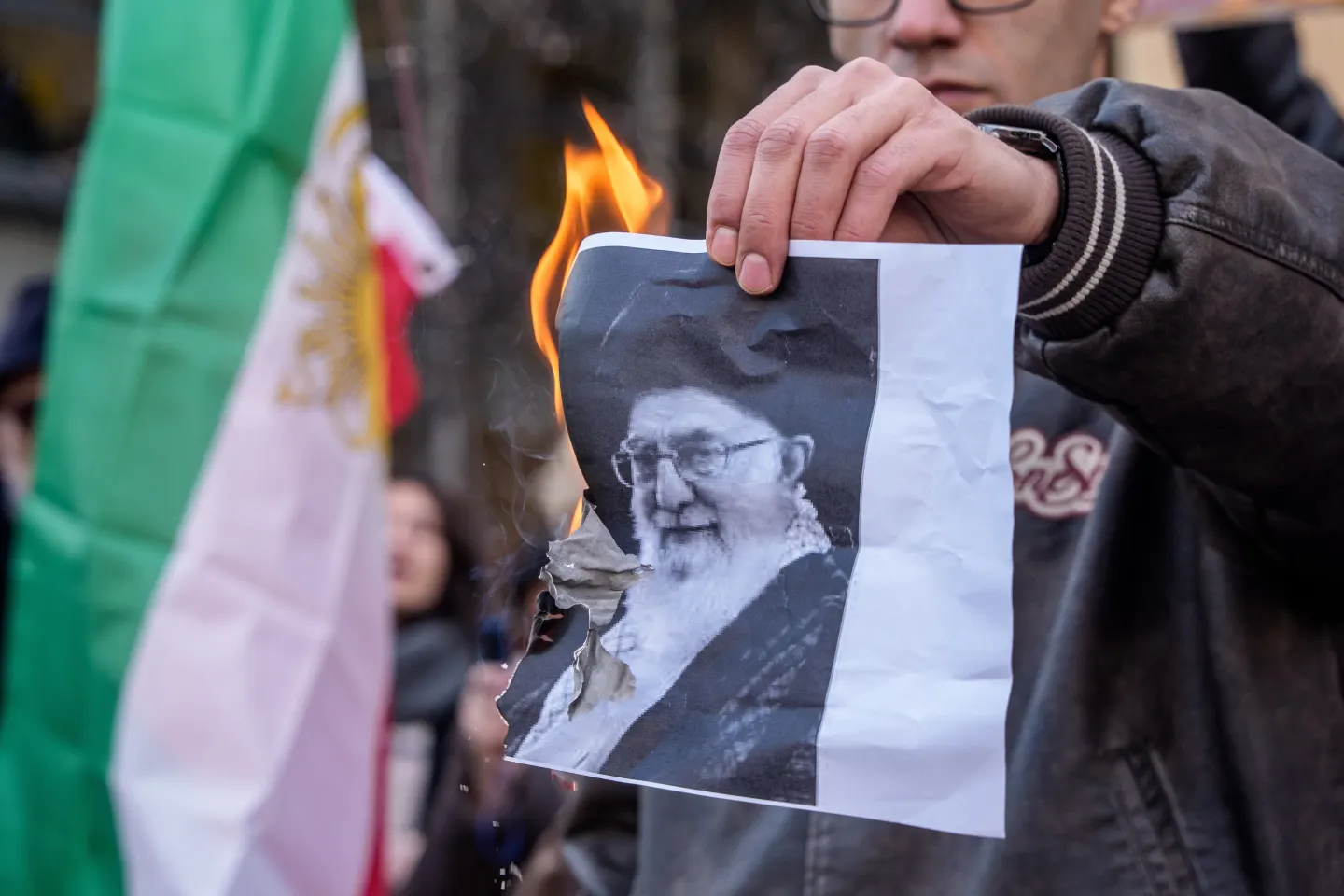
Iran’s ruling establishment is facing one of the most perilous moments in its 47-year history as the largest protests in years rock the country, leaving hundreds dead and exposing deep vulnerabilities at the top of the Islamic Republic.
The unrest, sparked by economic hardship and long-simmering public anger, has intensified following a violent crackdown by security forces that activists say has pushed the death toll into the hundreds. Internet access and communications with the outside world remain heavily restricted as demonstrations spread beyond Tehran to major cities across the country.
Hard-line figures within Iran’s government have threatened retaliation against the United States and Israel, accusing them of backing the protest movement. Despite the rhetoric, U.S. President Donald Trump has said Tehran has signaled a willingness to negotiate with Washington, and there are no indications of an imminent U.S.-led military intervention similar to events seen recently in Venezuela.
Leadership Weakened by War
Iran’s internal turmoil follows a period of significant military and political strain. The country’s leadership and armed forces were badly weakened during a 12-day war with Israel last June, compounded by U.S. airstrikes on Iranian nuclear facilities. Several senior commanders were killed, air defense systems were severely degraded, and Iran’s missile stockpile was reduced.
Supreme Leader Ayatollah Ali Khamenei, 86, who has held ultimate power since 1989, was absent from public view for days during and after the conflict, fueling speculation and uncertainty. With no clear successor in place, questions over leadership continuity have added to the instability.
Analysts say pragmatic voices within Iran’s political system exist but have been increasingly sidelined. Reformist President Masoud Pezeshkian, while seen as more moderate, wields limited authority and lacks the power to enact the sweeping economic and political reforms demanded by protesters.
“The U.S. now has leverage at the weakest point in the Islamic Republic’s history,” said Kamran Matin, an associate professor of international relations at the University of Sussex.
Regional and Global Isolation
Iran’s influence abroad has also waned. During the Gaza war, Israel struck at Tehran’s regional proxies, including Hezbollah in Lebanon, Hamas in Gaza, Houthi forces in Yemen, and allied groups in Syria and Iraq, diminishing Iran’s deterrence and reach.
Internationally, Tehran remains isolated. Russia, a key partner, is preoccupied with its war in Ukraine, while China has issued only cautious statements urging stability. In September, the United Nations reimposed sweeping sanctions after nuclear talks with Washington stalled, freezing Iranian assets, restricting arms deals, and tightening controls on Iran’s ballistic missile program.
Western powers continue to express alarm over Iran’s nuclear activities, particularly its stockpile of highly enriched uranium, despite Tehran’s insistence that its program is peaceful.
Economic Collapse Fuels Anger
Sanctions have further battered Iran’s economy. In late December, the national currency plunged to a record low of 1.42 million rials to the U.S. dollar, triggering sharp increases in food and fuel prices. Merchants and traders in Tehran’s major bazaars joined street protests, which quickly escalated into broader, leaderless demonstrations challenging the foundations of the theocracy.
Historically, organized opposition inside Iran has been suppressed, but repeated waves of protests over issues ranging from inflation to social restrictions have shown the public’s willingness to confront the state despite the risk of deadly crackdowns.
Uncertain Path Ahead
While some Iranians have looked to recent U.S. actions abroad and speculated about similar outcomes for Tehran’s leadership, U.S. officials have sought to temper expectations. Lawmakers in Washington have emphasized that U.S. policy aims to pressure Iran into changing its behavior particularly on nuclear and missile issues rather than forcibly removing the regime.
Despite mounting pressure, there are no clear signs of major fractures within Iran’s ruling elite, nor a unified opposition waiting to take power. Support has surfaced in some quarters for exiled Crown Prince Reza Pahlavi, but the depth and reach of that backing remain unclear.
“Iran’s leaders face a perilous moment, but they are no strangers to chaos,” said Ellie Geranmayeh of the European Council on Foreign Relations. “The regime has survived wars, sanctions and upheaval before. But the options for managing this crisis are narrowing fast.”
Analysts agree that any lasting change is likely to come from within Iran itself, as the country navigates a critical juncture marked by unrest, isolation, and an increasingly fragile leadership.