

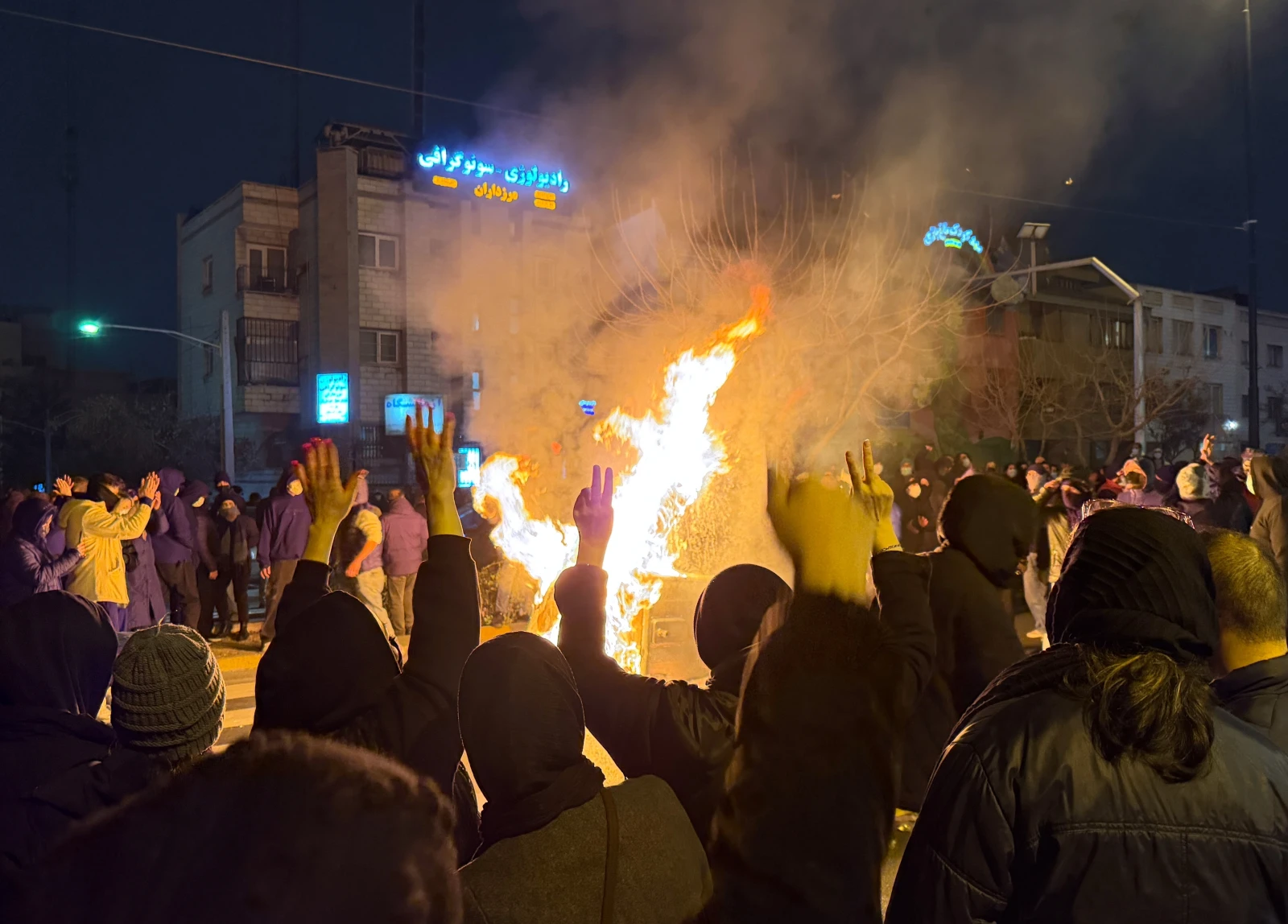
The death toll from Iran’s nationwide anti-government protests has climbed beyond 2,500, according to human rights activists, as limited phone connections to the outside world were restored on Tuesday following days of a government-imposed communications blackout.
The U.S.-based Human Rights Activists News Agency reported early Wednesday that at least 2,571 people had been killed since demonstrations erupted in late December over Iran’s collapsing economy and rising cost of living. The figure marks the deadliest wave of political unrest in the country in decades and has drawn comparisons to the upheaval that led to Iran’s 1979 Islamic Revolution.
Iranian state television offered its first indirect acknowledgment of the bloodshed, quoting an official who said the country had suffered “a lot of martyrs,” without providing a specific number.
Activists say 2,403 of those killed were protesters, while 147 were government-affiliated, with at least 12 children among the dead. A further 18,100 people have reportedly been detained. Independent verification remains difficult due to restrictions on media and internet access inside Iran.
As connectivity briefly returned, witnesses in Tehran described a city under heavy security lockdown. Burned government buildings, smashed ATMs and a visible presence of plainclothes security agents and riot police were reported across central districts.
“People are hopeless, but they talk about continuing the protests,” said Reza, a taxi driver in Tehran. Another resident, Mahmoud, said citizens were fearful but defiant, adding that many were also anxious about possible foreign intervention.
Demonstrations that began as protests over inflation and currency collapse have increasingly targeted Iran’s political leadership, including Supreme Leader Ayatollah Ali Khamenei, with chants and graffiti calling for his removal — a crime punishable by death under Iranian law.
U.S. President Donald Trump weighed in as reports of rising casualties emerged, posting on social media that Iranian citizens should continue protesting and urging an end to the violence. However, he later told reporters that his administration was awaiting verified figures before taking action.
Iranian officials rejected U.S. involvement, with senior security official Ali Larijani accusing Washington and Israel of being responsible for the unrest.
Despite limited phone calls being possible, internet access remains heavily restricted. Witnesses said only government-approved sites are reachable, while messaging platforms and foreign websites are blocked. Activists confirmed that Starlink satellite internet services had begun operating freely inside Iran, offering a rare communication lifeline to the outside world.
The scale of the crackdown and the growing number of deaths have intensified international concern, as Iran faces its most serious internal crisis in nearly half a century.