

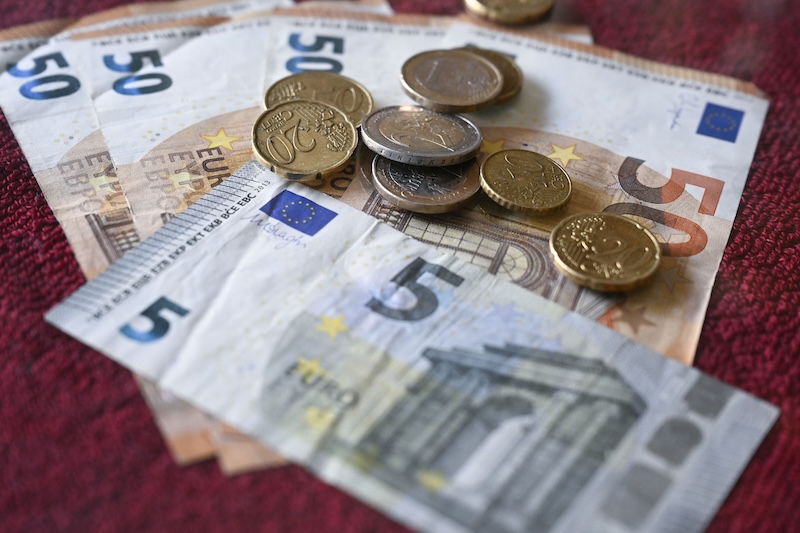
Finland’s lowest-income households are expected to face another decline in purchasing power in 2026, while the country’s highest earners continue to see gains, highlighting a widening gap across income groups.
New analysis from the Labour Institute for Economic Research (Labore) estimates that purchasing power among the lowest-income 10% of Finnish households will fall by 3.5% in 2026.
By contrast, purchasing power among the highest-income 10% is projected to increase by 2.2%.
Labore said the difference in purchasing-power growth between the two groups over the 2023–2026 period exceeds 16 percentage points.
Renters and single-parent households are also expected to experience some of the weakest developments in purchasing power.
“Purchasing power among the lowest income households has deteriorated for several years, and that trend won’t reverse in 2026,” Labore senior researcher Milla Nyyssölä said.
According to Nyyssölä, differences in income growth, rather than changes in prices alone, are a major reason for the widening gap between households.
Labore described the continued decline among lower-income households as unusual compared with previous economic cycles in Finland.
Consumer Confidence Weakens
The figures come as consumer confidence in Finland has declined after improving in previous months.
Statistics Finland reported that its consumer confidence indicator fell to -4.9 in September, compared with -3.0 in August.
Although September’s reading was better than the -6.6 recorded a year earlier, it remained below Finland’s long-term average of -2.9 since 1995.
The latest survey covered 1,157 people living in Finland and was conducted from September 1 to 17.
Consumers expressed weaker views of both their own household finances and the broader Finnish economy.
About 28% of respondents said their household finances were worse than a year earlier, while 25% reported an improvement.
Half of those surveyed said Finland’s economy had deteriorated over the previous year, compared with 18% who believed it had strengthened.
Statistics Finland senior actuary Pertti Kangassalo said consumer confidence had also weakened across the European Union.
He said the coming months would indicate whether the September decline represented a temporary setback or the beginning of a broader slowdown in the recovery of consumer sentiment.
Employment Concerns Persist
Concerns about the labour market remain another source of pressure on Finnish households.
Some 44% of respondents expected unemployment in Finland to increase during the coming year, while only 25% expected unemployment to decline.
Among employed respondents, 27% said their personal risk of becoming unemployed or being temporarily laid off had increased.
The persistent concern over employment is contributing to cautious household spending decisions.
Consumers Remain Cautious on Spending
Only 15% of respondents considered September a favourable time to make expensive purchases.
Over the next year, 37% said they planned to reduce spending on durable goods, while just 13% expected to spend more.
Car purchases were one notable exception.
Statistics Finland reported that 17% of respondents said they definitely or possibly planned to buy a car within the next 12 months. That was the highest level recorded since 2021.
Borrowing plans also showed some increase despite widespread concerns about taking out loans.
About 19% of respondents said they planned to borrow money during the coming year.
Meanwhile, 12% were considering buying or building a home, while 17% planned to carry out home renovations.
The latest figures point to an uneven economic picture in Finland, with higher-income households retaining greater spending power while lower-income groups continue to face financial pressure and consumers overall remain cautious about the economic outlook.