

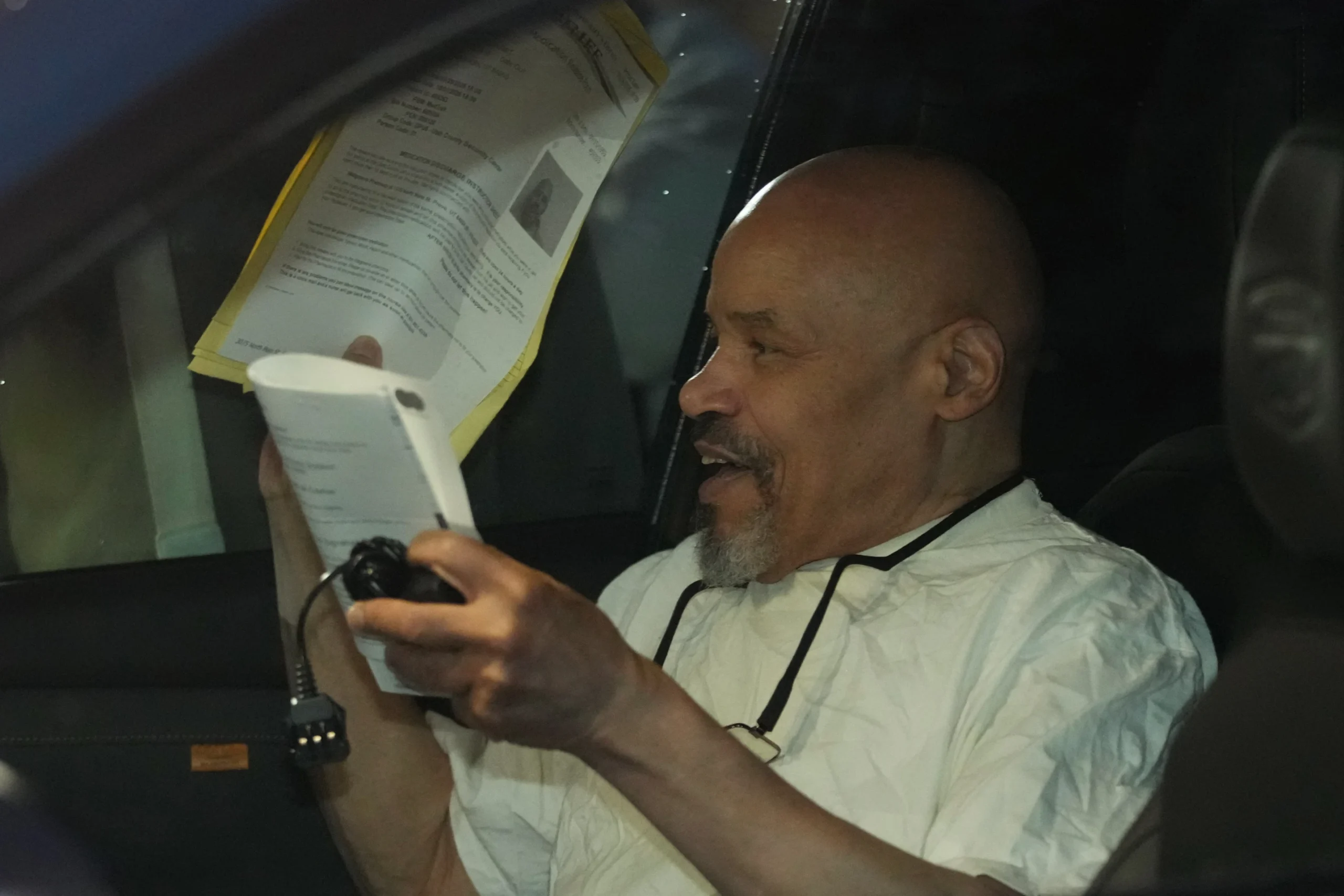
A 71-year-old Utah man who spent decades on death row for a 1985 murder has been released after prosecutors said newly analyzed DNA evidence does not match him.
Douglas Stewart Carter, who has maintained his innocence for decades, walked out of jail Monday after a Utah judge ordered his release on bail while prosecutors reconsider the case against him.
Carter was convicted of killing Eva Olesen, the aunt of a police chief, and was sentenced to death. His conviction was later followed by years of appeals and legal challenges.
The Utah Supreme Court ordered a new trial last year, citing misconduct by investigators. A new DNA analysis conducted after that ruling has now further weakened key parts of the prosecution’s case.
The analysis, received September 22, excluded Carter as a possible match to blood found on a doorknob and genetic material recovered from the handle of the knife used to stab Olesen, who was also shot.
Judge Derek Pullan said the results further undermined the case against Carter, although he noted that a reasonable jury could still reach a conclusion that Carter committed the killing.
Carter has been ordered to wear a GPS monitor while awaiting a new trial and has been prohibited from contacting Olesen’s family.
Carter Maintains His Innocence
Carter, originally from Chicago, was living with his mother in Utah when Olesen was killed on February 27, 1985.
Investigators eventually focused on Carter and accused him of killing Olesen during a robbery.
He fled Utah in April of that year, believing he was wanted in connection with an unrelated assault case, according to court documents. Carter was arrested in Nashville, Tennessee, in June 1985 and signed a confession during questioning by a Provo police detective.
Carter later said the confession was false and had been obtained after repeated threats from police.
He was convicted at trial, during which the defense did not call any witnesses, and was sentenced to death. He received another death sentence following a 1992 retrial.
For decades, Utah courts rejected multiple appeals before the case was reopened following revelations about the investigation.
Witnesses Later Recanted Testimony
The original conviction relied heavily on Carter’s confession and testimony from two witnesses who claimed he had bragged about killing Olesen.
A major turning point came in 2011, when defense attorneys located the two witnesses in Mexico.
The witnesses said they had been instructed to lie in court and had received cash and gifts from police. They also alleged that police and prosecutors threatened them and their son with deportation if they did not implicate Carter.
The revelations triggered more than a decade of legal proceedings.
Last year, the Utah Supreme Court ordered a new trial, citing what it described as “multiple instances of intentional misconduct” involving police and a prosecutor.
The subsequent DNA testing was conducted as part of the proceedings.
Prosecutors Reassess Case
Utah County prosecutor Erwin Petilos told the judge Monday that reassessing Carter’s bail was “necessary and fair” while prosecutors continue reviewing the remaining evidence.
A retrial lasting about two months had been planned for next year. Prosecutors last week withdrew a notice indicating that they intended to seek the death penalty.
Carter’s attorney, Neal Hamilton, has urged prosecutors to dismiss the aggravated murder charge still pending against his client.
Hamilton said Carter would need therapy to cope with the effects of his extended incarceration. Carter is expected to stay at a hotel near his son, Tyler Anger, who was adopted by another family as an infant and did not learn of his father’s conviction until years later.
Defense Points to Other Possible Suspects
Carter’s defense attorneys have argued that investigators failed to adequately pursue other possible suspects in Olesen’s killing.
They have pointed to accounts from witnesses who said they saw a white man fleeing the crime scene and have alleged that investigators suppressed evidence involving other suspects, including Olesen’s husband, Orla Olesen.
According to court documents, prosecutors had reportedly been considering charges against Orla Olesen before a Provo police lieutenant asked them not to proceed while the investigation continued.
Orla Olesen, a painting contractor who died in 2009, told police that he had discovered his wife dead at their home, partially undressed and with her hands tied behind her back.
Victim’s Family Objects to Release
Olesen’s family opposed Carter’s release.
During Monday’s bond hearing, Theresa Olesen, a daughter-in-law of Eva Olesen, said the family had serious concerns about Carter being released.
She also cautioned that the new DNA findings did not necessarily prove Carter was not involved in the killing.
“It doesn’t mean he wasn’t there,” she said.
Carter’s release does not resolve the criminal case. He remains charged and is expected to face further proceedings as prosecutors determine how to proceed with the retrial.