

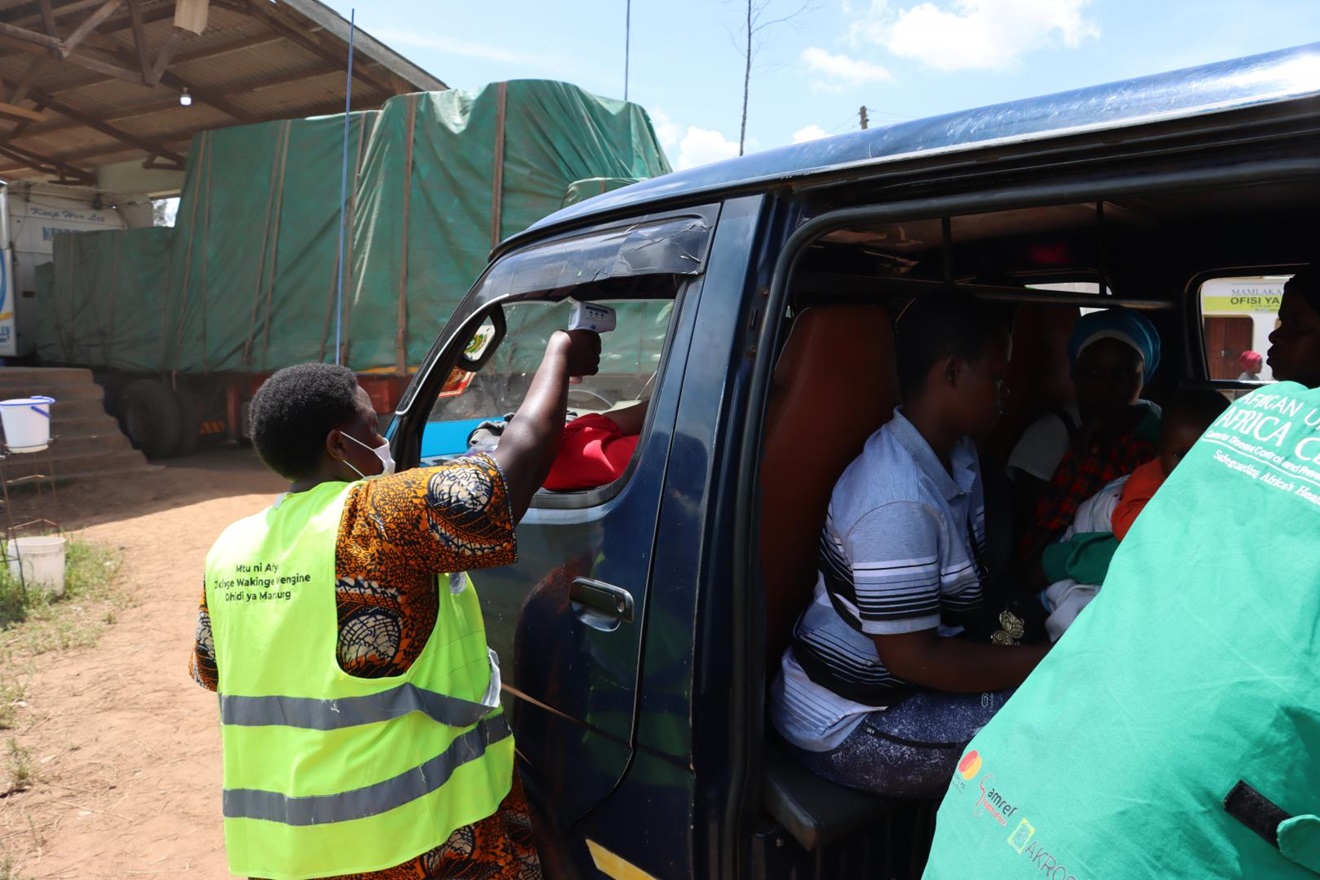
Traders operating along the Uganda–Democratic Republic of Congo border are facing mounting financial losses after Ugandan authorities tightened restrictions at key crossing points in response to a worsening Ebola outbreak in eastern Congo.
The closure of the Mpondwe border post, one of Uganda’s busiest trade gateways, has left trucks carrying perishable goods stranded for days, disrupting cross-border commerce and threatening the livelihoods of thousands of traders.
Among those affected is trader Leah Masika, whose consignment of plantain destined for Ugandan markets remained trapped in a long queue of vehicles on both sides of the border.
“All our goods are now there rotting,” she said, expressing concern that the fruits would spoil before receiving clearance to enter Uganda.
Uganda closed its western border with DR Congo on May 28, roughly two weeks after Congolese authorities declared an Ebola outbreak in Ituri Province. The restrictions were introduced to prevent cross-border transmission of the virus, with only limited exemptions granted for humanitarian operations, emergency services, cargo and security activities.
However, traders say movement of goods has slowed significantly in recent days as authorities intensified screening and enforcement measures.
The Mpondwe crossing serves as a major economic lifeline between the two countries. According to the Uganda Bureau of Statistics, informal exports through the border post were valued at approximately $131 million in 2023.
The closure has affected businesses on both sides of the frontier, with some shops shutting down and casual workers losing their source of income.
“Ebola has destroyed our work,” said roadside vendor Ismail Mumbere. “We were told that trucks would go through but people were barred from crossing, but now even cargo trucks are blocked.”
Health officials have defended the measures, citing the risk posed by the outbreak and the porous nature of the border.
Kasese District surveillance officer Arafat Bwambale said authorities are monitoring more than 30 unofficial crossing points often used by travellers moving between the two countries.
“The border on Mpondwe has porous points just across the board,” he said, noting that efforts are focused on preventing uncontrolled movement from outbreak-affected areas.
The current outbreak in eastern Congo is linked to the rare Bundibugyo strain of Ebola, for which there is currently no approved vaccine or specific treatment. Health experts have warned that the outbreak poses a significant regional threat as available therapies have shown limited effectiveness against the strain.
The World Health Organization has declared the outbreak a Public Health Emergency of International Concern, although it has discouraged blanket border closures, arguing that such measures can disrupt economies without necessarily stopping the spread of disease.
Uganda has confirmed 15 Ebola cases linked to the outbreak after infected Congolese nationals reportedly sought treatment in Kampala before the outbreak was formally identified.
Authorities say preparedness measures have been strengthened in border districts. Kasese’s referral hospital has established an isolation centre and laboratory facilities capable of producing Ebola test results within hours. Recent tests conducted on dozens of suspected cases in the district returned negative results.
Despite those efforts, officials are considering introducing additional restrictions on cargo movement, raising concerns among traders who depend heavily on cross-border business.
Masika said she has halted plans to import more produce from Congo until the outbreak is brought under control. However, she fears substantial losses if her current shipment fails to reach customers around Kampala, where plantain remains a staple food item.
“We are begging them to help us and open the border,” she said. “We will not go back to Congo.”
The Ebola outbreak in eastern Congo is suspected to have infected more than 1,000 people, though health officials say the number of confirmed cases remains lower because many suspected victims die outside medical facilities before testing can be conducted.
Authorities across East Africa continue to monitor the situation closely as efforts intensify to contain the spread of the deadly virus.