

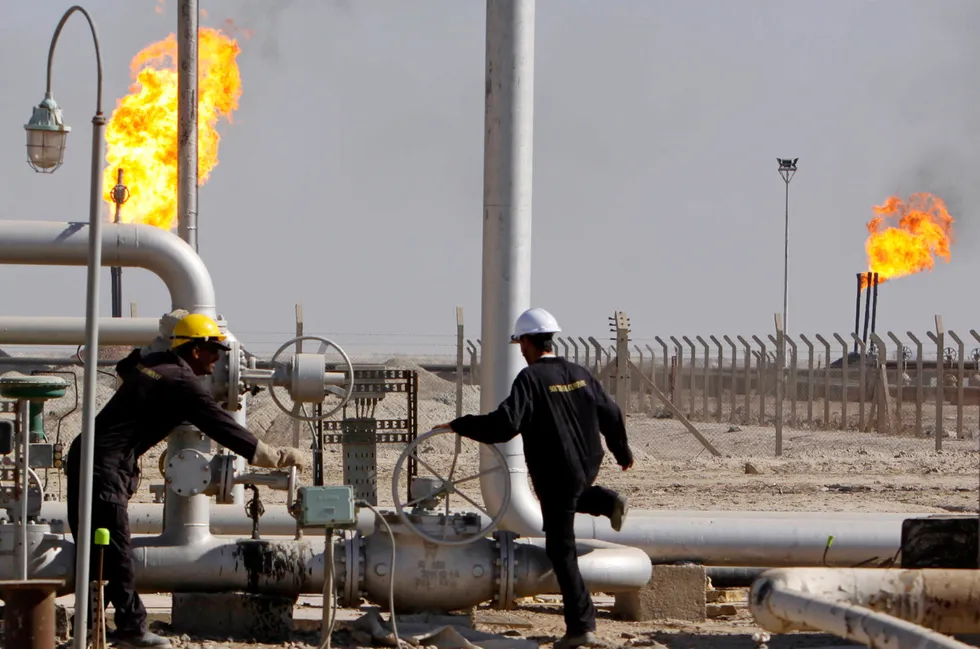
Oil production across the Middle East dropped significantly in March as the ongoing conflict involving the United States, Israel and Iran disrupted exports and shipping routes in the region.
Traffic through the Strait of Hormuz, one of the world’s most critical oil corridors, has been largely halted since fighting began at the end of February, severely restricting crude exports from major producers.
According to a new report released by the Organization of the Petroleum Exporting Countries, crude production among its member states fell by about 27 percent month-on-month to below 21 million barrels per day.
The steepest declines were recorded in Iraq, Saudi Arabia, Kuwait and the United Arab Emirates, all of which rely heavily on exports passing through the Strait of Hormuz.
Iraq reported that its crude exports dropped dramatically in March to about 18.6 million barrels, compared with roughly 99.9 million barrels the previous month.
The report also indicated that oil production in Iran declined slightly, while other members such as Algeria, Libya and Gabon also recorded modest decreases in output. In contrast, production in Nigeria showed an increase during the same period.
OPEC said the conflict has also affected global energy demand forecasts. The organization lowered its projection for worldwide oil demand in the second quarter by 500,000 barrels per day due to the impact of the war on economic activity and trade.
Despite the short-term slowdown, OPEC maintained its overall forecast for global oil demand growth in 2026, predicting an increase of 1.4 million barrels per day over the year.
The group said weaker demand earlier in the year is expected to be offset by stronger consumption during the third and fourth quarters as markets stabilize.