

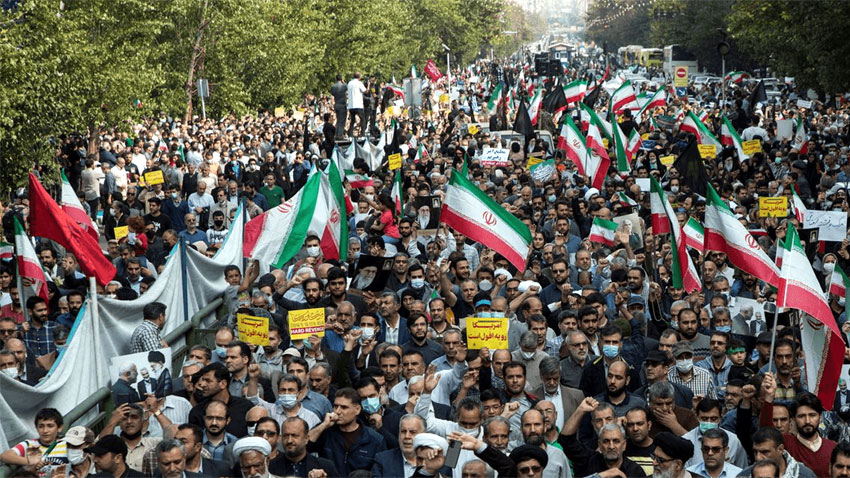
Iran’s nationwide internet blackout has entered its third week as activists report that at least 5,002 people have been killed in a sweeping crackdown on protests, deepening concerns over what rights groups describe as the most severe repression in the country’s modern history.
The U.S.-based Human Rights Activists News Agency (HRANA) said more than 26,800 people have also been detained since demonstrations erupted across the country. The figures, which cannot be independently verified due to the communications shutdown, far exceed official government numbers.
Iranian authorities have acknowledged 3,117 deaths, a tally widely questioned by activists and analysts who point to the state’s long record of underreporting casualties during periods of unrest. With mobile networks and the wider internet largely inaccessible, international media organizations say verification on the ground is nearly impossible.
Rights groups warn that the blackout has become a deliberate tool to suppress dissent and conceal the scale of violence, with activists relying on fragmented phone calls, smuggled footage, and offline networks to document events.
Rising tensions with the United States
The internal crisis is unfolding amid escalating tensions between Iran and the United States. An American aircraft carrier group has moved closer to the Middle East, a deployment President Donald Trump recently described as an “armada,” fueling fears of a wider confrontation.
Analysts at the New York-based Soufan Center say the military buildup gives Washington options for potential strikes, though no direct action has yet been taken. Trump has previously warned of “red lines,” including mass executions of detained protesters.
This week, Trump repeatedly claimed Iran had halted plans to execute 800 detainees, a statement Tehran has strongly denied.
Iran rejects execution claims
Iran’s top prosecutor, Mohammad Movahedi, dismissed the allegations as “completely false,” saying no such decision had been taken by the judiciary. Speaking through the judiciary’s Mizan news agency, he said the claims were unfounded and emphasized that Iran does not take instructions from foreign governments.
His remarks hinted at internal tensions, suggesting that disputed figures may have emerged through diplomatic channels rather than judicial processes. Hardline clerics later used state media to launch personal attacks on Trump, underscoring the increasingly hostile tone of official rhetoric.
Diplomatic backlash and uncertainty
Iran’s Foreign Ministry has also condemned a recent resolution by the European Parliament that denounced what it described as mass killings and repression of protesters. The resolution called for the designation of Iran’s Revolutionary Guard as a terrorist organization for its role in suppressing demonstrations.
Tehran warned of “reciprocal action,” signaling further diplomatic fallout as international pressure mounts.
With the digital blackout still in place, the true scale of deaths and detentions remains unclear. What is evident, observers say, is that Iran is facing one of its gravest domestic crises in decades, compounded by an increasingly volatile standoff with foreign powers, while ordinary citizens bear the brunt of the violence in near-total isolation.