

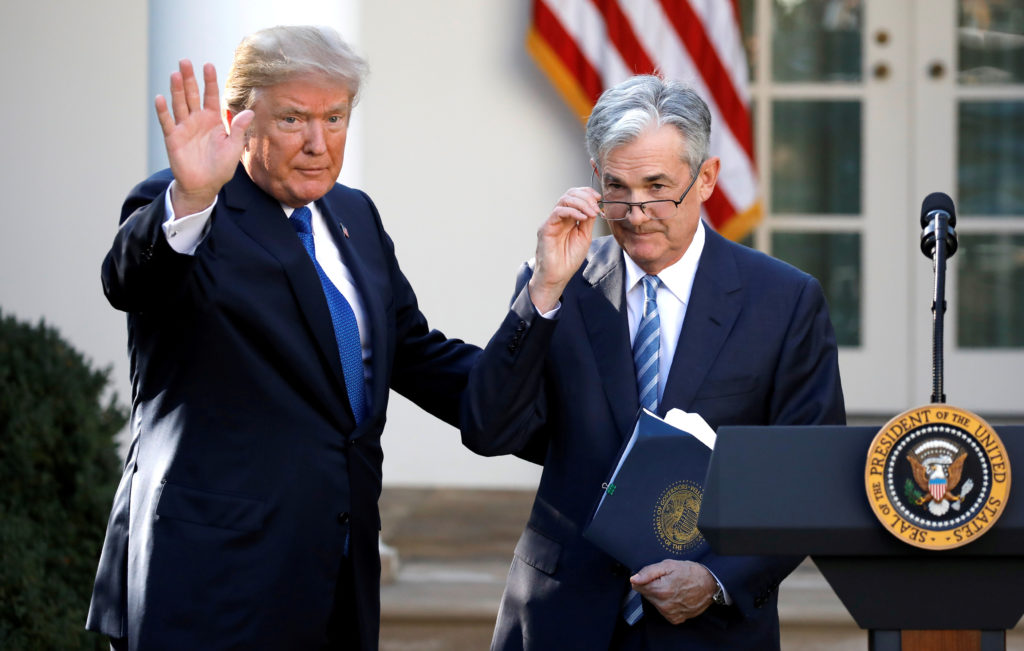
A criminal investigation launched by the Trump administration into Federal Reserve Chair Jerome Powell has triggered a sharp bipartisan backlash in Washington, with lawmakers, former central bank leaders and economists warning that the move threatens the long-standing independence of the U.S. central bank.
The controversy escalated after Powell disclosed that the Department of Justice had subpoenaed the Federal Reserve, citing concerns over his testimony to Congress about a $2.5 billion renovation project at the Fed’s headquarters in Washington. Powell said the investigation was being used as a pretext to pressure him into cutting interest rates, a demand President Donald Trump has repeatedly made public.
Several Republican senators broke ranks with the White House following the disclosure. Senator Thom Tillis of North Carolina said the subpoenas confirmed efforts by the administration to undermine the Fed’s autonomy and warned he would oppose any Trump nominee to the central bank. Alaska Senator Lisa Murkowski echoed the criticism, describing the investigation as coercive.
The dispute comes at a sensitive moment for U.S. monetary policy. Powell has resisted calls for aggressive rate cuts, arguing that inflation risks remain elevated following tariffs imposed by the Trump administration. Trump, by contrast, insists inflation is no longer a concern and has blamed Powell for slowing economic growth.
Economists say the Justice Department’s actions could have the opposite effect of what the White House intends. Analysts believe the Fed is now even less likely to cut rates at its next policy meeting, in part to signal that it will not bend to political pressure.
A bipartisan group of former Federal Reserve chairs and senior economic officials issued a rare joint statement on Monday, warning that politicizing monetary policy mirrors practices seen in countries with weak institutions. The signatories included former Fed chairs Ben Bernanke, Janet Yellen and Alan Greenspan, as well as former Treasury secretaries Henry Paulson and Robert Rubin.
While Powell’s term as Fed chair ends in May, he remains a governor until 2028. Some analysts say the investigation may increase the likelihood that he stays on the board beyond his chairmanship to help safeguard the institution’s independence, potentially limiting Trump’s ability to reshape the Fed.
Financial markets have so far reacted calmly, suggesting investors believe Powell can withstand the legal challenge. Nonetheless, the episode has intensified debate over the balance of power between the White House and the central bank, with broader implications for inflation, employment and confidence in U.S. economic governance.