

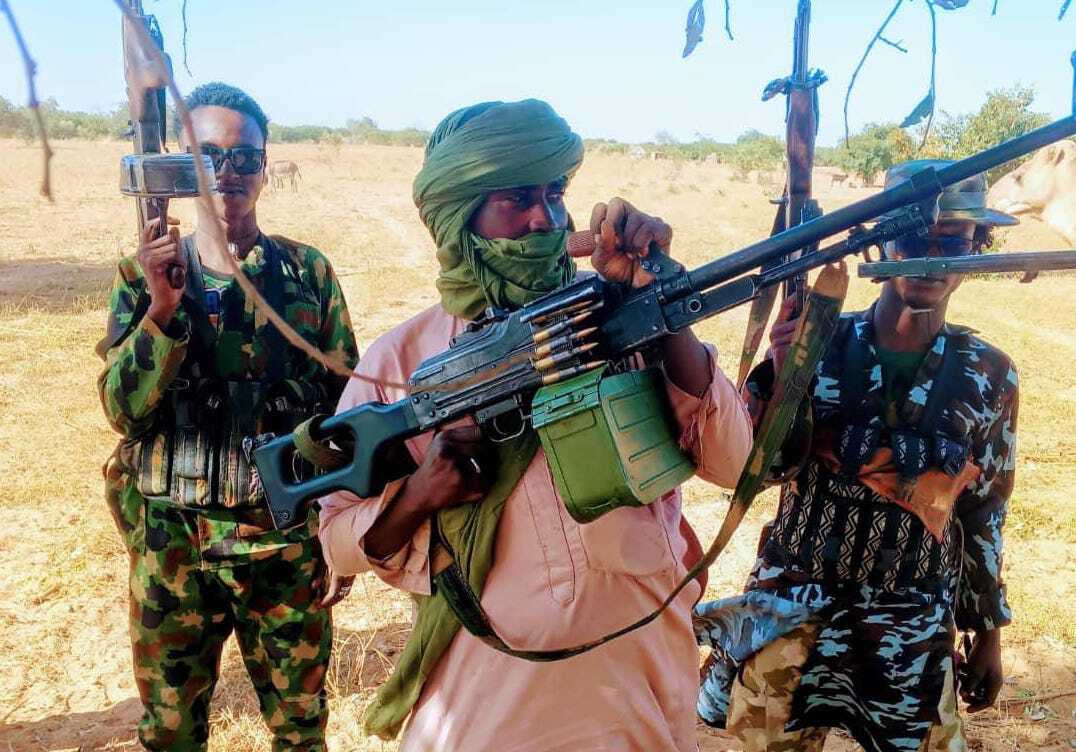
An intelligence dossier attributed to Israel’s foreign intelligence service, Mossad, has alleged the existence of an extensive network of Nigerian and international individuals involved in financing terrorism linked to Boko Haram, revealing multi-billion-naira transactions spread across hundreds of bank accounts.
The report, which is circulating among security and counterterrorism stakeholders, outlines how businessmen, bureau-de-change operators, forex traders and politically exposed persons allegedly facilitated the movement of funds for arms procurement, logistics and operational support for extremist activities over several years.
According to the intelligence findings, one of the most prominent figures named is Alhaji Saidu Ahmed, a 63-year-old businessman based in Zaria, described as a central financier within the network. His accounts reportedly recorded inflows of approximately ₦4.8 billion, with transaction links to individuals previously convicted in terrorism cases in the United Arab Emirates.
Another key figure identified is Usaini Adamu, also known as Baba Hussaini, a Kano-based businessman allegedly operating more than 100 BVN-linked accounts across multiple banks. The report claims his accounts recorded inflows exceeding ₦43 billion and outflows of about ₦50 billion, with guarantees provided for accounts allegedly used for arms and logistics operations.
Several other individuals, including Muhammad Sani Adam, Abubakar Adamu Yellow, Murtala Abdullahi Jega, and Sadiq Garba Abubakar, are accused of managing dozens of bank accounts each, moving billions of naira through complex transaction patterns allegedly connected to known Boko Haram financiers and procurement channels.
The intelligence document further alleges that some operators completed transfers to companies such as Leaf Tobacco & Commodities, which it describes as an internationally identified procurement route for terrorist weapons, citing prior court rulings outside Nigeria.
Beyond Nigeria, the report names foreign actors accused of facilitating cross-border terror financing. Among them is the late Rwandan businessman Tribert Rujugiro Ayabatwa, whose accounts allegedly recorded inflows of about ₦67 billion before his death in 2024, as well as Paul Nkwaya, a co-owner of Leaf Tobacco & Commodities, and Aboubacar Hima, a Nigerien arms dealer reportedly under investigation for international money-laundering schemes.
The document claims that funds were moved through banking systems in Nigeria, the UAE, South Africa and other jurisdictions, often using forex trading, cash withdrawals and layered transfers to obscure their origin.
Nigerian authorities have not publicly confirmed the authenticity of the intelligence report or announced any new arrests linked to its contents. However, security analysts note that the allegations, if substantiated, could prompt renewed scrutiny of financial networks, banking oversight and cross-border cooperation in the fight against terrorism financing.
The intelligence source states that monitoring of terror sponsorship networks remains ongoing, emphasizing that financial disruption remains a critical front in counterterrorism efforts worldwide.