
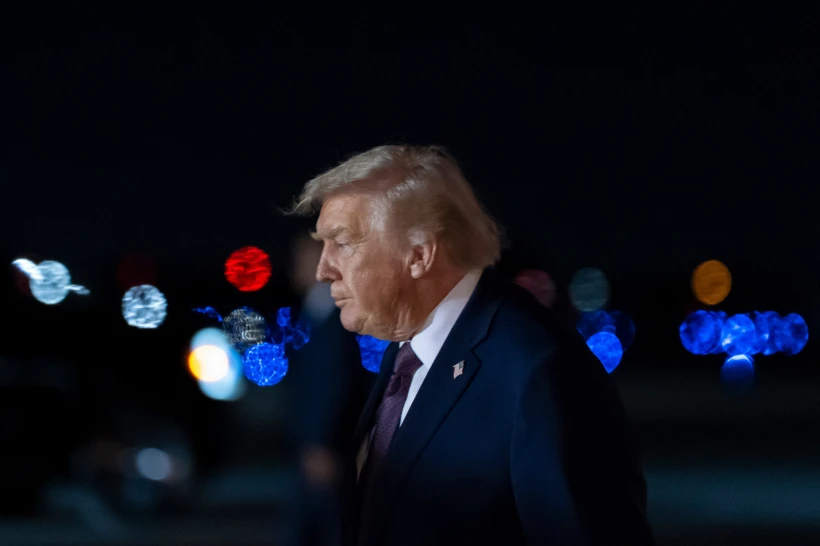
President Donald Trump is set to meet with senior national security officials on Monday amid an escalation of U.S. actions against Venezuela, including stepped-up efforts by the Coast Guard to intercept oil tankers accused of helping Caracas evade American sanctions.
The meeting, to be held at Trump’s Mar-a-Lago resort in Florida where the president is vacationing, will include Secretary of State Marco Rubio, Defense Secretary Pete Hegseth and Navy Secretary John Phelan. The White House described the gathering as a platform for a “major announcement,” with officials indicating Trump is expected to outline a new shipbuilding initiative.
However, the timing of the meeting underscores rising geopolitical tensions linked to the administration’s four-month pressure campaign against Venezuelan President Nicolás Maduro. Initially framed as an effort to curb the flow of illegal drugs, the strategy has expanded into a broader confrontation targeting Venezuela’s oil exports and international support networks.
According to a European intelligence official speaking on condition of anonymity, Russia has begun evacuating the families of its diplomats from Venezuela, including women and children. The official said the Russian Foreign Ministry is assessing the situation in “very grim tones,” signaling concern about the country’s stability. Neither the White House nor the Kremlin immediately commented on the reports.
At sea, the U.S. Coast Guard on Monday continued pursuing a sanctioned oil tanker in the Caribbean for a second consecutive day. U.S. officials allege the vessel is part of a Venezuelan “dark fleet” operating under false flags to skirt sanctions and that it is subject to a U.S. judicial seizure order.
The pursuit follows a series of recent interdictions. On Saturday, the Coast Guard seized the Panama-flagged tanker Centuries, while earlier this month U.S. forces captured another sanctioned tanker, Skipper, also registered in Panama. Both vessels were described by U.S. officials as integral to Venezuela’s shadow oil trade.
After the first seizure, Trump declared that the United States would effectively impose a “blockade” on Venezuela, reiterating claims that Maduro’s grip on power is weakening. Last week, the president demanded the return of assets seized years ago from U.S. oil companies, further justifying the crackdown on tankers traveling to and from Venezuelan ports.
Homeland Security Secretary Kristi Noem said the campaign is intended to send a global warning. “The illegal activity that Maduro is participating in cannot stand,” she said during an appearance on U.S. television, adding that Washington would “stand up for our people.”
At the same time, the Pentagon continues a parallel campaign targeting smaller vessels in the Caribbean and eastern Pacific that U.S. authorities allege are involved in drug trafficking. Since early September, at least 104 people have been killed in 28 known strikes, according to available figures.
Those operations have drawn growing scrutiny from lawmakers and human rights groups, who argue the administration has provided limited evidence linking the targets to narcotics trafficking and warn the strikes could amount to extrajudicial killings.
As Trump prepares his announcement alongside top security officials, the unfolding actions in the Caribbean highlight an increasingly assertive U.S. posture toward Venezuela one that is reverberating well beyond the region.