

With the 2026 U.S. midterm elections approaching, both Republicans and Democrats are mobilizing aggressively in a high-stakes contest that could determine control of the House of Representatives, setting up a familiar but intensified political showdown shaped by the lessons of 2018.
At the center of the Republican strategy is first-term Congressman Brian Jack of Georgia, who has emerged as a key figure in President Donald Trump’s efforts to defend his party’s narrow House majority. Jack, now the GOP’s top House recruiter, has become a regular presence at the White House, where he reviews polling data and prospective candidate profiles directly with the president.
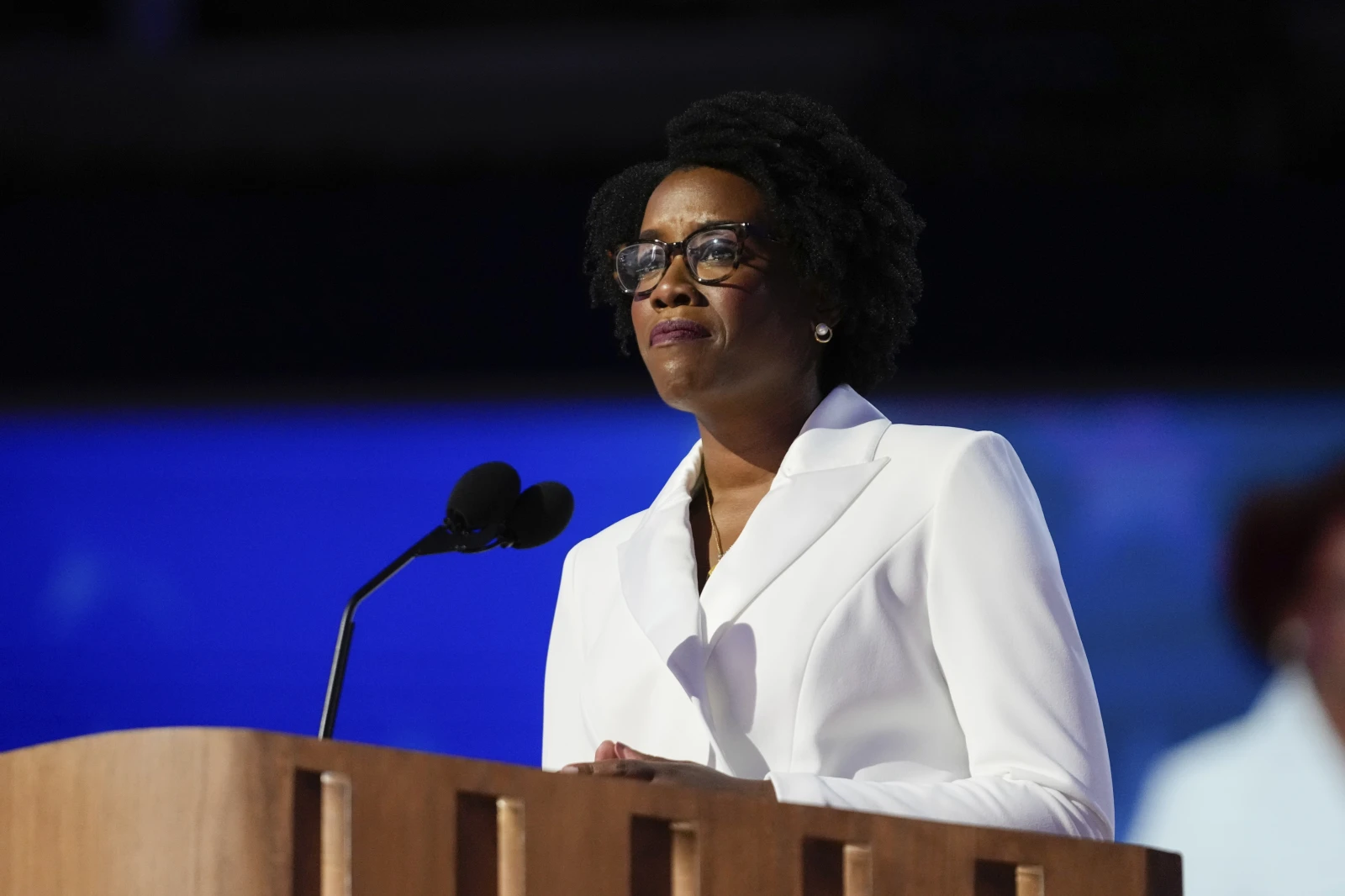
Across Pennsylvania Avenue, Democrats are pursuing a markedly different approach. Illinois Congresswoman Lauren Underwood, who leads candidate recruitment for her party, operates without direct White House access, instead focusing on grassroots outreach and phone calls aimed at identifying candidates capable of flipping Republican-held seats.
Despite their contrasting methods, both lawmakers share a common origin story: the 2018 midterms, when Democrats flipped dozens of seats and reshaped Trump’s first term. Underwood won her seat that year, while Jack later managed the political fallout as Trump’s White House political director.
Now, Underwood hopes to replicate that success in 2026, while Jack is working to prevent it.
Trump’s direct hand in GOP recruitment
For Republicans, the strategy is closely tied to Trump himself. Jack said enthusiasm for the president and alignment with his “Make America Great Again” agenda are motivating a new wave of candidates.
“You’re seeing a lot of people very inspired by President Trump,” Jack said, describing Oval Office discussions that focus on finding candidates who can win while staying aligned with White House priorities.
Trump’s involvement marks a contrast with 2017, when he was less engaged with House campaign strategy. Having experienced the 2018 losses firsthand, the president is now deeply involved in recruitment and endorsements, according to Jack, who continued advising Trump even after leaving the White House and before launching his own successful congressional bid in 2024.
Republicans point to candidates such as former Maine Gov. Paul LePage as examples of strong alignment with Trump in competitive districts. In places like Albuquerque, New Mexico, Jack said the party has multiple contenders with compelling backgrounds, including law enforcement and military experience.
Democrats focus on local credibility
Democrats, meanwhile, are emphasizing community ties and service beyond Washington politics. Underwood said her recruitment strategy mirrors 2018, when candidates with backgrounds as nurses, veterans, educators and activists helped fuel Democratic gains.
“It’s about having ordinary Americans step up,” Underwood said, drawing a contrast with what she described as “MAGA extremists.”
A registered nurse, Underwood said her own decision to run was driven by Republican efforts to repeal the Affordable Care Act. She now shares that experience with prospective candidates to help them connect personal backgrounds to public service.
Democrats are again seeing strong interest from veterans and national security professionals, including former Marines and naval officers running in Arizona and Virginia. Underwood noted clear parallels to 2018, when candidates with military and intelligence backgrounds went on to win seats and later statewide office.
Gerrymandering adds uncertainty
Complicating the landscape is mid-decade redistricting pushed by Trump and Republican leaders in several states. While the new maps have reshaped the battlefield, Democrats still identify more than three dozen Republican-held seats they consider competitive. Republicans, in turn, are targeting about two dozen Democratic districts.
Democrats point to recent special elections where their candidates outperformed Trump’s 2024 margins by double digits as evidence of shifting momentum. Party strategists say the environment resembles early signs seen ahead of the 2018 wave.
Still, both sides acknowledge that success will depend on matching candidates to district cultures from rural Midwest seats to culturally distinct areas like South Texas, where Democrats are considering a Tejano music star as a potential challenger.
As recruitment accelerates on both sides, the 2026 midterms are shaping up as a defining test of Trump’s enduring influence — and of Democrats’ ability to once again turn opposition energy into electoral gains.