

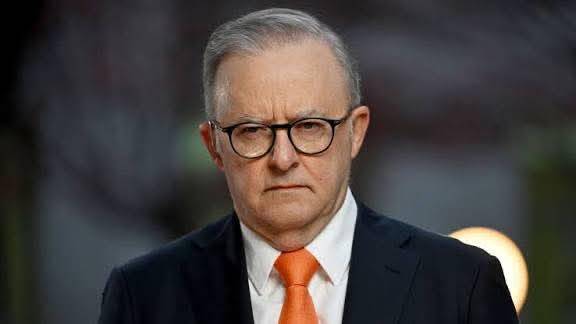
An open letter circulating in Australia’s public space has called on Prime Minister Anthony Albanese to resign, following the deadly antisemitic terror attack during a Hanukkah celebration at Bondi Beach that left multiple people dead and dozens injured.
The letter, signed by Peter Singer, describes the Bondi attack as a national tragedy and a moral breaking point for the country, arguing that Australia has experienced a sharp rise in antisemitism and social division in recent years. It frames the attack as part of a broader failure of political leadership and national cohesion.
In the strongly worded message addressed directly to the prime minister, the author accuses the government of presiding over what he describes as an era of weekly hate-driven demonstrations, deteriorating international standing, and a breakdown in Australia’s long-standing relationship with Israel. The letter also criticizes the government’s recognition of Palestine, claiming it has contributed to international ridicule and heightened domestic tensions.
The author further alleges that authorities have failed to adequately confront Islamist extremism, particularly within religious institutions, while simultaneously providing public funding. Universities are also singled out, described as spaces where hatred has been allowed to fester rather than being challenged.
The letter references findings by Australia’s Special Envoy to Combat Antisemitism, Jillian Segal, suggesting that her warnings were sidelined while the government awaited the release of a separate report on Islamophobia. This, the author argues, reflects flawed judgment and an inability to respond decisively to rising antisemitic threats.
Calling for what he describes as a “human, not political” response, the author urges the prime minister to step aside in the national interest. He also calls for the immediate dismissal of senior ministers, arguing that such actions would be the first step toward restoring public confidence and national dignity.
The open letter has added to growing public debate following the Bondi attack, as Australia grapples with questions about security, social cohesion, and the political responsibility for preventing extremist violence. Government officials have not formally responded to the letter, but the prime minister has previously pledged national unity and a thorough investigation into the attack.
As the country mourns the victims, the letter underscores the increasingly polarized political climate and the pressure mounting on Australia’s leadership to address extremism, public safety, and social harmony.