

Iranian officials intensified diplomatic outreach across the Middle East on Wednesday amid rising fears of a possible U.S. military strike, as the country’s currency plunged to a new historic low and the fallout from weeks of nationwide protests continued to shake the Islamic Republic.
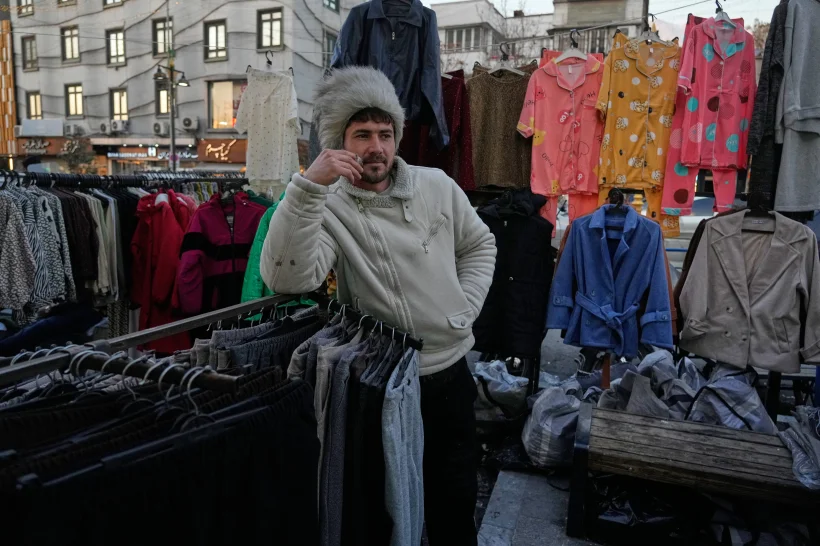
Local currency traders reported that the Iranian rial fell to 1.6 million to the U.S. dollar, underscoring the deepening economic crisis that initially triggered protests in late December before they broadened into a direct challenge to Iran’s theocratic leadership. The currency has lost enormous value over the past decade, having traded around 32,000 to the dollar ten years ago.
Two key regional powers, Saudi Arabia and the United Arab Emirates, have indicated they will not permit their airspace to be used for any attack against Iran. At the same time, the United States has repositioned major naval assets into the region, including the aircraft carrier USS Abraham Lincoln and several guided missile destroyers capable of launching strikes from the sea.
U.S. President Donald Trump has repeatedly warned that Washington could use force in response to the killing of protesters and reports of possible mass executions, while also signaling he still wants Iran to engage in negotiations over its nuclear program.
“Hopefully Iran will quickly ‘Come to the Table’ and negotiate a fair and equitable deal NO NUCLEAR WEAPONS,” Trump wrote on his Truth Social platform, adding that “time is running out.” He also cautioned that any future attack would be “far worse” than previous U.S. strikes.
Iran’s mission to the United Nations responded that Tehran remains open to dialogue but warned it would defend itself if attacked.
“Iran stands ready for dialogue based on mutual respect and interests but if pushed, it will defend itself and respond like never before,” the mission said in a post on X.
U.S. Secretary of State Marco Rubio told Congress that the expanding American military posture in the region is meant to protect U.S. personnel and allies from potential Iranian threats. While describing Iran’s leadership as weaker than ever, Rubio stopped short of endorsing regime change.
Inside Iran, access to the global internet has been largely cut off for nearly three weeks, leaving state media as the primary source of information for many citizens. Authorities refer to protesters as “terrorists,” even as anger and anxiety persist over the economic collapse and reports of lethal force by security services.
“I feel that my generation failed to give a better lesson to younger ones,” said Mohammad Heidari, a 59-year-old teacher in Tehran. “The result of decades of teaching led to the death of thousands, and maybe more injured and prisoners.”
Diplomatic activity between Iran and regional states has accelerated. Egypt said its foreign minister spoke with Iranian Foreign Minister Abbas Araghchi and U.S. Middle East envoy Steve Witkoff in an effort to prevent further regional escalation. Turkey’s foreign minister also held talks with Araghchi, citing concerns about instability and potential refugee flows.
Saudi Crown Prince Mohammed bin Salman told Iranian President Masoud Pezeshkian that Saudi airspace and territory would not be used for military action against Iran, a stance echoed by the UAE. Iran has also contacted Qatar, which hosts a major U.S. military base.
“Our position is exactly this: Applying diplomacy through military threats cannot be effective or constructive,” Araghchi said. “If they want negotiations to take shape, they must abandon threats, excessive demands and illogical issues.”
Meanwhile, activists say the human cost of the unrest continues to rise. The U.S.-based Human Rights Activists News Agency reported Wednesday that at least 6,373 people have been killed, including nearly 6,000 protesters and more than 100 children. The group also said over 42,000 people have been arrested. Iran’s government has acknowledged 3,117 deaths, a figure widely questioned by rights groups.
The scale of the violence is described by observers as the deadliest episode of unrest in Iran in decades, recalling the turmoil surrounding the 1979 Islamic Revolution.
As Iran’s economy continues to slide and international pressure grows, the country faces an uncertain future marked by internal fragility and an increasingly dangerous regional standoff.