
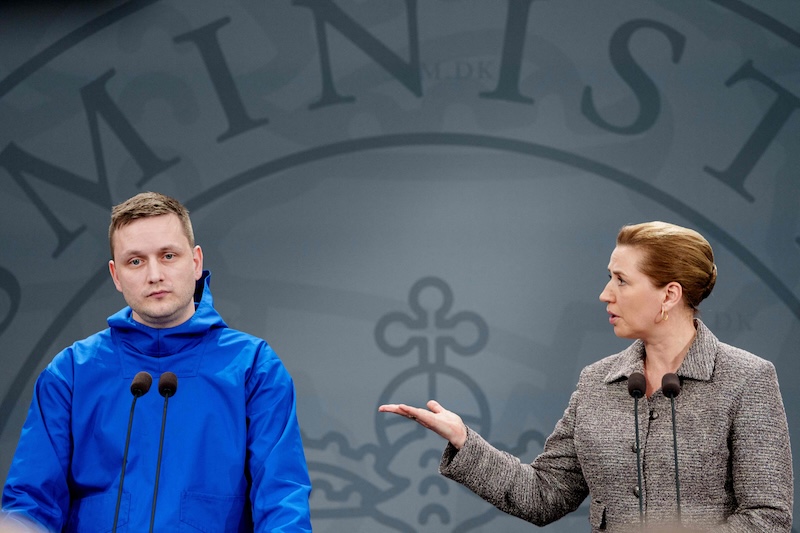
Greenland has firmly dismissed any suggestion of becoming part of the United States, with Prime Minister Jens-Frederik Nielsen declaring that the autonomous Arctic territory has chosen to remain aligned with Denmark, the European Union and NATO.
Speaking at a press conference on Tuesday, Nielsen said Greenland’s future would be decided only by its own people, rejecting recent statements by U.S. President Donald Trump suggesting that the island should fall under American control for strategic reasons.
“We are a democratic society that makes our own decisions,” Nielsen said. “Greenland does not want to be owned by the United States, and Greenland will not be governed from Washington.”
The statement comes just one day before senior Danish and Greenlandic officials are due to meet U.S. leaders in Washington. Denmark’s Foreign Minister Lars Løkke Rasmussen and Greenland’s Foreign and Research Minister Vivian Motzfeldt are scheduled to hold talks with U.S. Secretary of State Marco Rubio on Wednesday. U.S. Vice-President J.D. Vance is also expected to attend after requesting to host the meeting at the White House.
Rasmussen confirmed that Copenhagen and Nuuk sought the meeting following Trump’s renewed comments about annexing Greenland. The U.S. president has argued that American control of the territory is necessary to prevent Russia or China from gaining influence in the Arctic. He has also criticized Denmark’s defense posture in the region, calling Greenland strategically vital to U.S. security.
Denmark’s Prime Minister Mette Frederiksen reinforced Greenland’s position, stressing unity between Copenhagen and Nuuk. “We come together, we stay together, and we leave together,” she said, adding that borders cannot be altered by force and that smaller nations should not be intimidated by larger powers.
Frederiksen also underlined Denmark’s long-standing alliance with the United States, noting that the country has met its NATO obligations for decades.
Greenland, while self-governing, remains part of the Kingdom of Denmark and is covered by NATO through the Danish realm. Nielsen said the island’s security and defense “firmly belong in NATO” and should be strengthened within the alliance framework rather than through unilateral control.
The issue has heightened diplomatic tensions in the Arctic at a time of growing global competition for influence and resources in the region.