

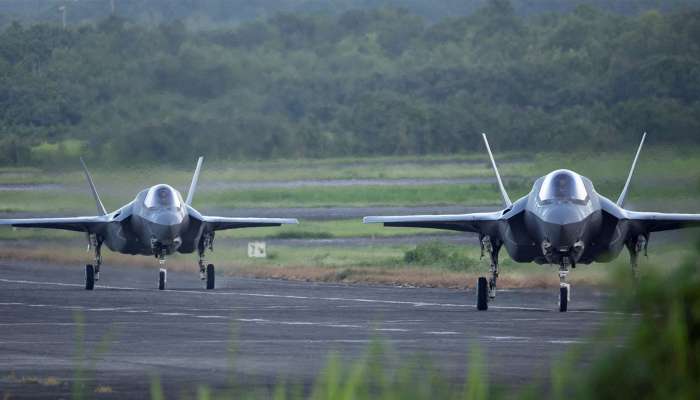
The United States military flew a pair of Navy F/A-18 fighter jets over the Gulf of Venezuela on Tuesday, marking one of the closest American warplane maneuvers to Venezuelan territory since the Trump administration began intensifying pressure on Caracas.
Public flight-tracking platforms showed the jets operating over the narrow gulf bordered by Venezuela and just 150 miles across at its widest point for more than 30 minutes. A U.S. defense official confirmed the “routine training flight,” stressing that the aircraft remained in international airspace.
The official, speaking on condition of anonymity, said it was unclear whether the jets were armed but noted the operation resembled previous missions intended to demonstrate the reach of U.S. air power rather than provoke confrontation.
Although U.S. bombers such as the B-52 and B-1 have flown near Venezuela’s coastline in past years, no aircraft have come as close to the country’s territorial boundary as the fighter jets did on Tuesday, according to available public flight data.
The maneuver adds to an expanding American military footprint across the Caribbean and eastern Pacific. Since early September, U.S. forces have carried out 22 lethal strikes on alleged drug-smuggling vessels, killing at least 87 people. President Donald Trump has hinted at future land-based operations but has offered no details.
Venezuelan President Nicolás Maduro maintains that U.S. military activities are part of a broader campaign to remove him from power a claim Washington denies.
The operations have triggered rising concern in Congress. Lawmakers are pushing for unedited footage of recent boat strikes, including one that killed two survivors clinging to debris after an initial missile hit. Defense Secretary Pete Hegseth told congressional leaders he is still considering whether such recordings will be released.
Hegseth’s briefing to lawmakers came the same day Adm. Alvin Holsey, outgoing commander of U.S. Southern Command, met separately with the leadership of the Senate Armed Services Committee.
Trump has defended the aggressive operations as necessary to disrupt drug cartels, asserting the United States is engaged in an “armed conflict” against narcotics networks threatening American security.
The flight path of the F/A-18s became one of the most monitored movements on flight-tracking site Flightradar24, underscoring heightened public attention on U.S.–Venezuela tensions.
Venezuela continues to claim the Gulf of Venezuela as sovereign water a position long disputed by U.S. officials and international legal scholars.