

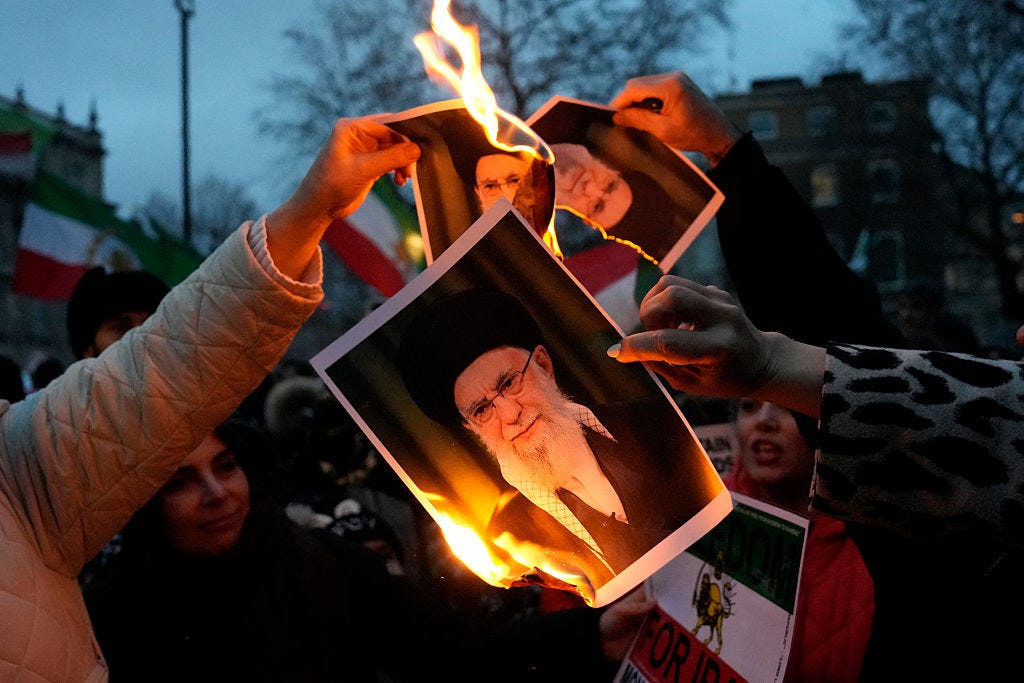
With a single strike of a lighter and a brief drag of a cigarette, an Iranian woman living in Canada has emerged as a global symbol of defiance against Iran’s intensifying crackdown on dissent, as images of her act ripple across social media and real-world protests worldwide.
A short video that went viral this week shows the woman setting fire to a photograph of Ali Khamenei, Iran’s supreme leader, using the flame to light a cigarette before dropping the burning image to the ground. The footage—lasting just over half a minute—has become one of the most striking visuals linked to the ongoing protests in Iran, where demonstrators have rallied against economic hardship and political repression.
Whether the moment was staged or spontaneous remains debated online. What is clear is its impact. The gesture has been replicated by protesters and activists from Israel to Germany, Switzerland and the United States, turning a fleeting act into a shared emblem of resistance.
The video resonated widely because it openly defied several taboos enforced by Iran’s theocracy: the woman appears without a hijab, burns an image of the supreme leader—an offense punishable by death in Iran—and smokes in public, an act often stigmatized by authorities. For many viewers, the scene encapsulated personal autonomy in the face of state control.
The symbolism has gained traction as Iran tightens its grip on information. State media have announced waves of arrests and authorities have sought to cut off communication, including searches for satellite internet equipment used to bypass blackouts. Activists say the death toll from the crackdown has risen into the thousands, eclipsing previous protest movements in recent decades.
In the digital age, the image has also become a battleground for competing narratives. Iranian officials have long portrayed unrest as foreign-instigated, while protesters frame it as an organic uprising against governance failures. The spread of the video underscores how quickly symbols can leap from screens to streets, even as questions swirl about misinformation, psychological operations and authenticity.
The woman behind the video has not publicly disclosed her real name, citing safety concerns for family members still in Iran. In interviews with international media, she has identified herself as an Iranian refugee in her mid-20s living in Toronto. She says the video was filmed on January 7, just before Iran imposed a near-total internet blackout.
She has described a history of arrests and abuse linked to her opposition to the Islamic Republic, including detentions during protests in 2019 and 2022 and again in 2024. After her release on bail, she fled Iran, eventually securing refuge in Canada.
Despite the uncertainty surrounding the origins of the footage, its influence is unmistakable. As protests continue and global attention sharpens on Tehran, a brief spark captured on camera has become a lasting symbol of dissent—one that supporters say reflects both the risks Iranians face and the power of imagery in shaping global opinion.