

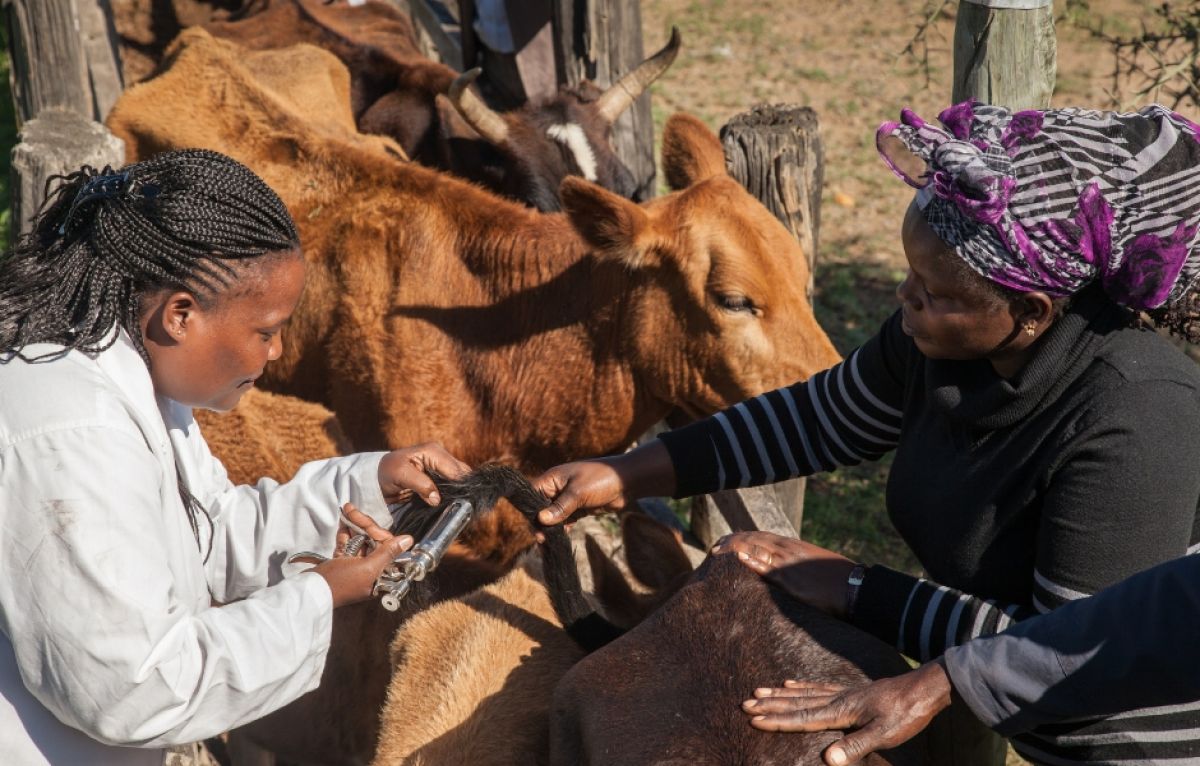
Farmers in South Africa’s Eastern Cape province are facing severe losses as a widespread outbreak of foot-and-mouth disease sweeps across the livestock heartland of the country, leaving herds sick and local economies strained.
The disease, declared a national disaster in February, has sparked panic in an area home to over two cattle per person. Despite a government vaccination program launched in January to protect nearly 20 million cattle over ten years, many farmers say the effort came too late to contain the crisis.
Pointing to a motionless calf in a green field near Humansdorp, farmer Igsahn Felix lamented, “That one is not going to make it.” Of the 245 animals in Felix’s cooperative, 128 have fallen ill and 14 have died. The outbreak has already cost the cooperative 180,000 rands ($32,000), a significant portion of their annual income of 540,000 rands.
Quarantine and control measures
Authorities have implemented strict measures to halt the virus’s spread. Vehicles passing through affected areas are sprayed with disinfectant, and quarantine zones prohibit the sale or slaughter of meat. Signs declaring “Foot-and-mouth disease control area” mark the roads surrounding infected farms.
The disease causes fever and blisters around the hooves and mouth, preventing animals from feeding and leaving survivors emaciated. The virus can remain active in cow dung for up to six months, heightening the risk of further infection.
Neighboring countries, including Botswana, Eswatini, and Zimbabwe, have also reported cases in recent months. The outbreak has already led to South African beef being banned in Zambia and China, a key export market.
Political and economic fallout
Agriculture Minister John Steenhuisen cited the outbreak in February as a factor in his decision not to seek re-election as leader of the Democratic Alliance, the country’s second-largest party. Analysts say the crisis has weakened his political standing ahead of local government elections later this year.
Farmers, meanwhile, continue to shoulder much of the financial burden despite government vaccination programs. Cattle breeder Doane Kaizer, whose herd of 60 cows has been affected, said, “Sanitisation has a cost too. I am sure the government can do more. Things need to step up a bit.”
Vaccination drive underway
South Africa lost its foot-and-mouth-free status in 2019, and outbreaks since 2021 have spread nationwide. The country finally received 2.5 million imported vaccine doses in late February targeting the strains currently circulating. Veterinarian Anthony Davis, a member of the government vaccination task force, warned that the campaign is a critical test: “This vaccine has never been used in this country before.”
Humansdorp, which suffered heavy losses during the 2024 outbreak, remains particularly vulnerable. Officials are especially concerned about Woodlands Dairy, the country’s third-largest dairy in the area, which employs over 1,000 people. Deputy Mayor Timothy Jantjes described a potential outbreak at the facility as having “huge” economic implications.
With the virus capable of spreading even by wind, the Eastern Cape—home to over four million cattle—continues to monitor the situation closely as farmers and authorities race to contain the outbreak.