
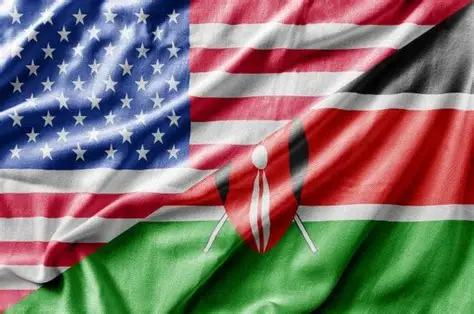
The United States and Kenya on Thursday formalized a major five-year global health partnership, becoming the first nations to sign what officials say will be a new series of “America First” agreements reshaping U.S. foreign aid.
Valued at $2.5 billion, the pact is central to the Trump administration’s drive to shift more responsibility for HIV/AIDS, malaria, tuberculosis and polio response to partner nations. The new framework replaces several previous arrangements formerly managed by the now-dismantled U.S. Agency for International Development.
At the signing ceremony in Washington, U.S. Secretary of State Marco Rubio said the model represented a new era of cooperation. He described it as “true assistance” aimed at long-term self-sufficiency rather than external dependency.
Under the agreement, U.S. funds will be redirected from non-governmental organizations to the Kenyan government, which is expected to gradually assume full responsibility for health workers initially financed by Washington. Kenya has committed to increasing domestic health spending by $850 million across the five-year term.
Kenyan President William Ruto welcomed the deal, describing it as a boost to his administration’s universal health coverage agenda. He said the framework strengthens efforts to modernize hospital equipment, improve delivery of medical supplies, expand the health workforce and widen insurance access.
U.S. officials indicated that additional African countries are expected to adopt similar agreements in the coming days, though Nigeria and South Africa are unlikely to join due to political disagreements with the Trump administration.
The dissolution of USAID as an independent body has drawn criticism from several global health actors, citing the loss of funding to hundreds of programs focusing on maternal care, nutrition and anti-HIV/AIDS interventions across developing regions.