


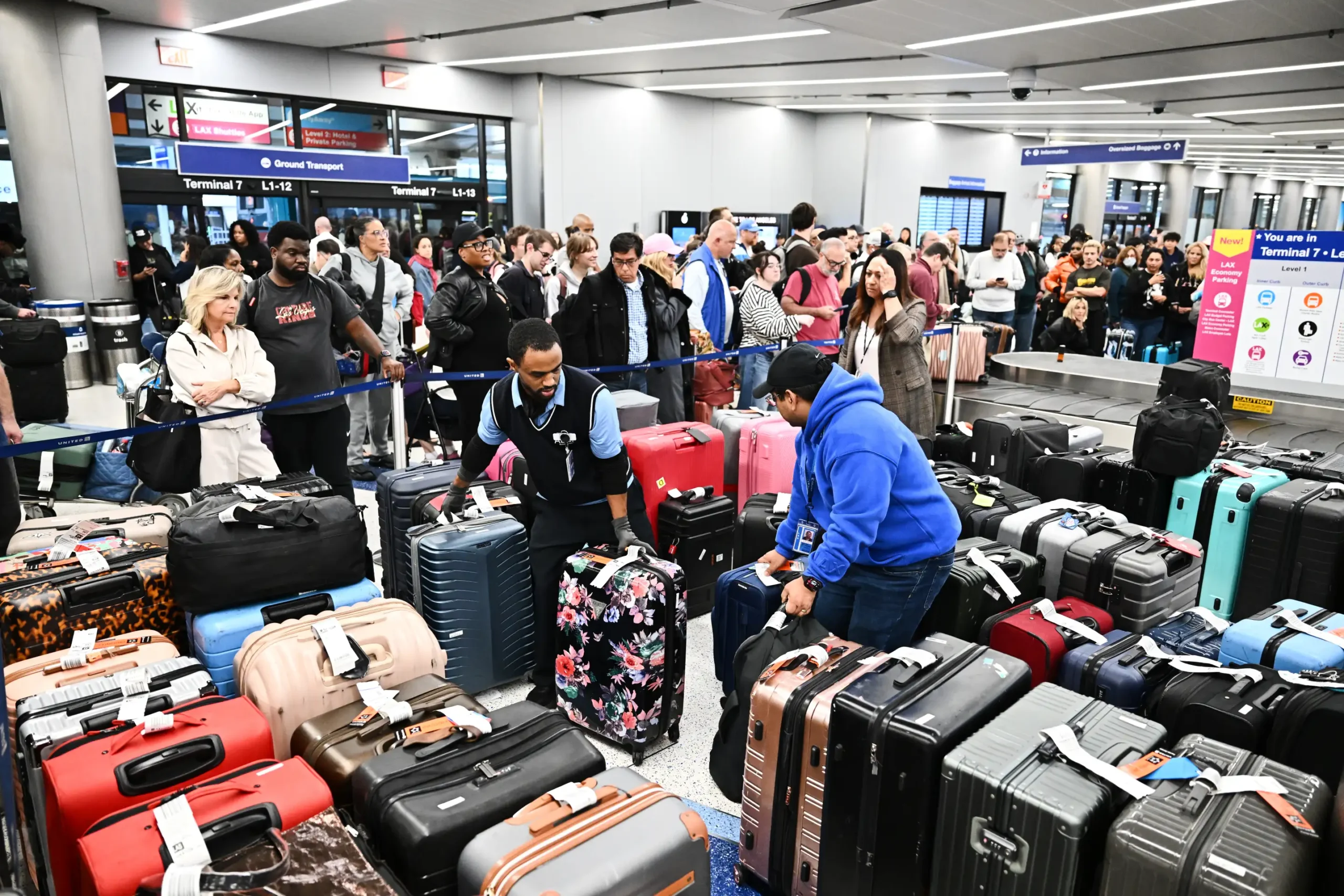
The United States Federal Aviation Administration (FAA) has lifted a nationwide ground stop that halted aircraft departures across the country on Friday, November 13, following widespread communications problems affecting the country’s air traffic control system.
The disruption, which lasted approximately five hours, forced airlines to suspend departures at airports nationwide after the FAA reported technical difficulties affecting regional air traffic control centres.

The agency subsequently announced that aircraft departures could resume, allowing airlines to begin restoring operations. However, officials warned that passengers should expect continued delays and cancellations as airlines work to reposition aircraft and crews.
Transportation Secretary Sean Duffy attributed the disruption to an overload of ageing air traffic control infrastructure, explaining that the system’s outdated analogue telecommunications equipment struggled to handle data from newer technology.
According to Duffy, inconsistencies in data transmitted through the system’s routers affected radar and communications operations, prompting authorities to halt departures as a safety precaution.
Officials Call for Investment in Outdated Aviation Infrastructure
The incident has renewed concerns about the condition of the United States’ air traffic control infrastructure and the need for substantial investment to modernise the system.
Homeland Security Secretary Markwayne Mullin called for additional funding to improve the country’s aviation technology, highlighting the importance of addressing weaknesses in the existing infrastructure.
The US government has already begun a major programme to replace ageing equipment, including old copper communication lines and radio systems. However, officials have indicated that completing the modernisation will require further financial commitments.
Authorities also said there was no immediate evidence that the communications outage resulted from a cyberattack, although investigations into the cause continued.
Duffy Warns Flight Disruptions May Continue
Although the FAA has authorised departures to resume, Duffy cautioned that restoring normal flight operations would take time.
The ground stop left aircraft and flight crews out of position, creating additional challenges for airlines attempting to return to their regular schedules.
Passengers were therefore advised to anticipate delays and check with their respective airlines for updated flight information.
The disruption affected thousands of flights and created uncertainty for travellers across the country, with the impact extending beyond passenger transportation to cargo operations and other scheduled activities.
NBA, NHL and College Teams Caught in Travel Disruption
The aviation shutdown also affected professional and collegiate sports teams preparing for a busy weekend of competition.
Several NBA, NHL and college teams were left stranded after their scheduled flights were halted, creating uncertainty over their ability to reach destinations ahead of upcoming fixtures.
Among the affected college football programmes were the Utah Utes, Texas Longhorns and Tennessee Volunteers, who were travelling for important Saturday games.
The disruption also affected NBA teams, including the Brooklyn Nets, whose scheduled flight from New Orleans to Memphis was interrupted after players had boarded their aircraft.
Several NHL teams were similarly affected as they prepared for Saturday’s fixtures.
Meanwhile, NFL teams scheduled to play on Sunday were expected to travel on Saturday, leaving some uncertainty over whether the aviation disruption could create further complications if recovery operations took longer than anticipated.
Modernisation of US Air Traffic Control System Back in Focus
The nationwide ground stop has brought renewed attention to the challenges of maintaining an aviation system that depends partly on ageing communications infrastructure.
While the immediate disruption has been addressed sufficiently for departures to resume, the incident highlights the importance of reliable technology in managing one of the world’s busiest aviation networks.
For millions of travellers and the airlines operating across the United States, the priority now is restoring normal schedules and preventing similar disruptions in the future.

