


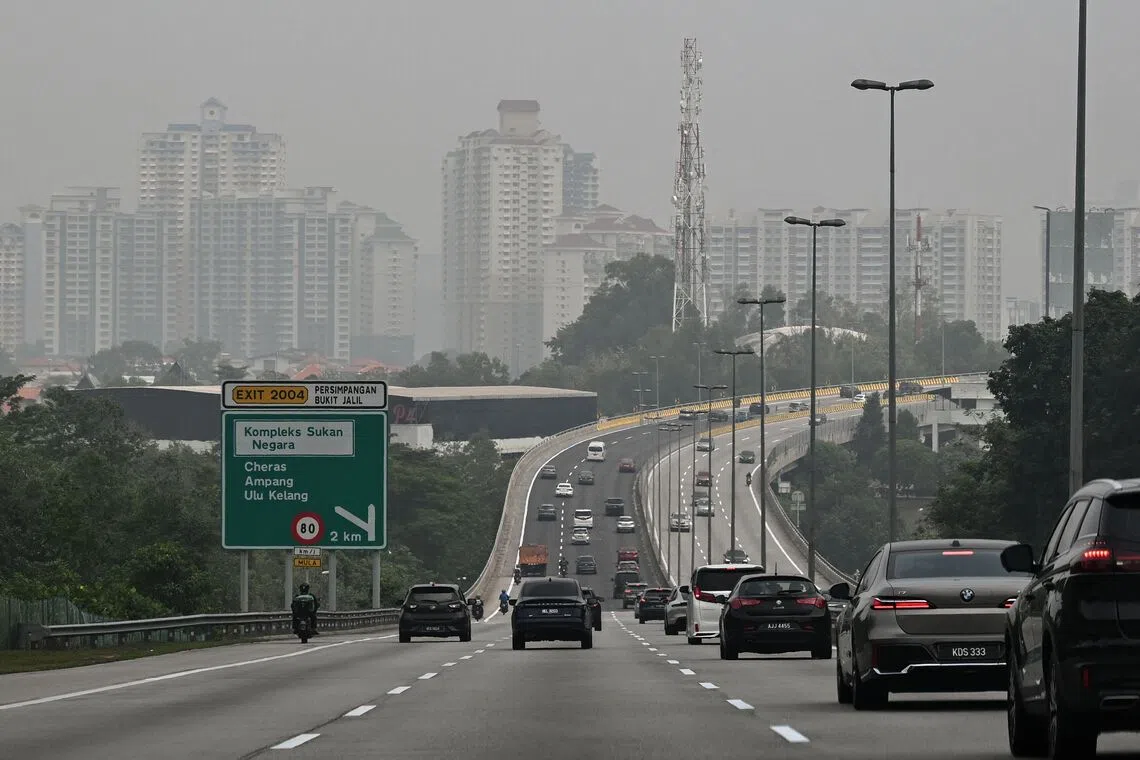
Malaysia plans to equip at least half of its 34 expressways with Smart Highway technology as part of efforts to improve road safety, ease traffic congestion and increase the efficiency of the country’s transport system.
Works Minister Alexander Nanta Linggi said the initiative would integrate artificial intelligence (AI), smart closed-circuit television (CCTV) systems and detection and early-warning technologies to identify high-risk incidents, including road accidents.
Other planned features include solar-powered lighting, digital mobility applications and electric vehicle (EV) charging infrastructure.
In a statement issued by Malaysia’s Ministry of Works on October 19, Nanta also highlighted plans to establish a National Intelligent Traffic Management Centre to improve real-time monitoring, integrated data analysis and coordination of traffic management operations.
Another key component is the multi-lane free flow toll collection system, which would allow vehicles to pass through toll points without stopping at barriers, helping to reduce congestion and travel times.
Government Reviewing Implementation Framework
Nanta said the government was allowing highway concessionaires and industry partners to refine a business-to-business model for implementing the initiative, under the regulatory oversight of the Malaysian Highway Authority (MHA).
The proposed framework will consider technological and commercial feasibility, interoperability between systems, payment integration, data security and consumer protection.
According to the ministry’s statement, technical, operational and legal preparations are being finalised before the proposal is submitted to the Malaysian government for consideration and final approval.
The initiative forms part of Malaysia’s broader efforts to incorporate intelligent transport systems into highway operations and infrastructure management.
Malaysia Highlights Smart Transport at Global Congress
Nanta outlined the plans during a high-level roundtable session at the 2026 Intelligent Transport Systems World Congress in Gangneung, South Korea, running from October 19 to 23.
Themed “Beyond Mobility, Connected World,” the congress brings together approximately 60,000 participants from around 90 countries to discuss innovations and future developments in intelligent transport systems.
The gathering provides a platform for governments, industry representatives and technology stakeholders to exchange ideas on improving mobility, transport connectivity and infrastructure efficiency.
Malaysia and South Korea Seek Stronger Infrastructure Cooperation
On the sidelines of the congress, Nanta held a bilateral meeting with South Korea’s Second Vice-Minister of Land, Infrastructure and Transport, Jeong Eui-kyung, to discuss closer cooperation in infrastructure development, construction technology and intelligent transport systems.
Speaking to Malaysian media after the meeting, Nanta said both countries explored opportunities to strengthen cooperation in road and highway infrastructure, including the adoption of emerging technologies and more efficient management practices.
The discussions also reviewed progress under a memorandum of understanding previously signed between the MHA and the Korea Expressway Corporation (KEC).
Nanta said the meeting assessed achievements under the existing partnership and considered ways to expand collaboration in highway development and the application of modern technologies.
The MHA and KEC are scheduled to hold a follow-up session on October 20 to further strengthen their cooperation in highway infrastructure development.
The planned discussions are expected to build on the two countries’ existing partnership as Malaysia advances its proposed Smart Highway programme.

