


Rising fuel prices, higher agricultural production costs and growing economic frustrations among farmers are emerging as significant political concerns for Republicans ahead of the United States midterm elections, particularly in traditionally conservative agricultural states.
Fifth-generation Kansas farmer Glenn Brunkow has described the harvest season as “go time,” when farmers combine fields, transport crops to market and move livestock from summer pastures to winter housing. However, this year’s harvest has been complicated by soaring diesel prices, unpredictable markets and shrinking profit margins.
Diesel prices are more than $2.50 per gallon higher than a year ago, placing additional pressure on farmers already struggling with rising costs for fuel, fertiliser and seeds.
“It seems like it’s coming at us from all directions,” said Brunkow, president of the Kansas Farm Bureau.
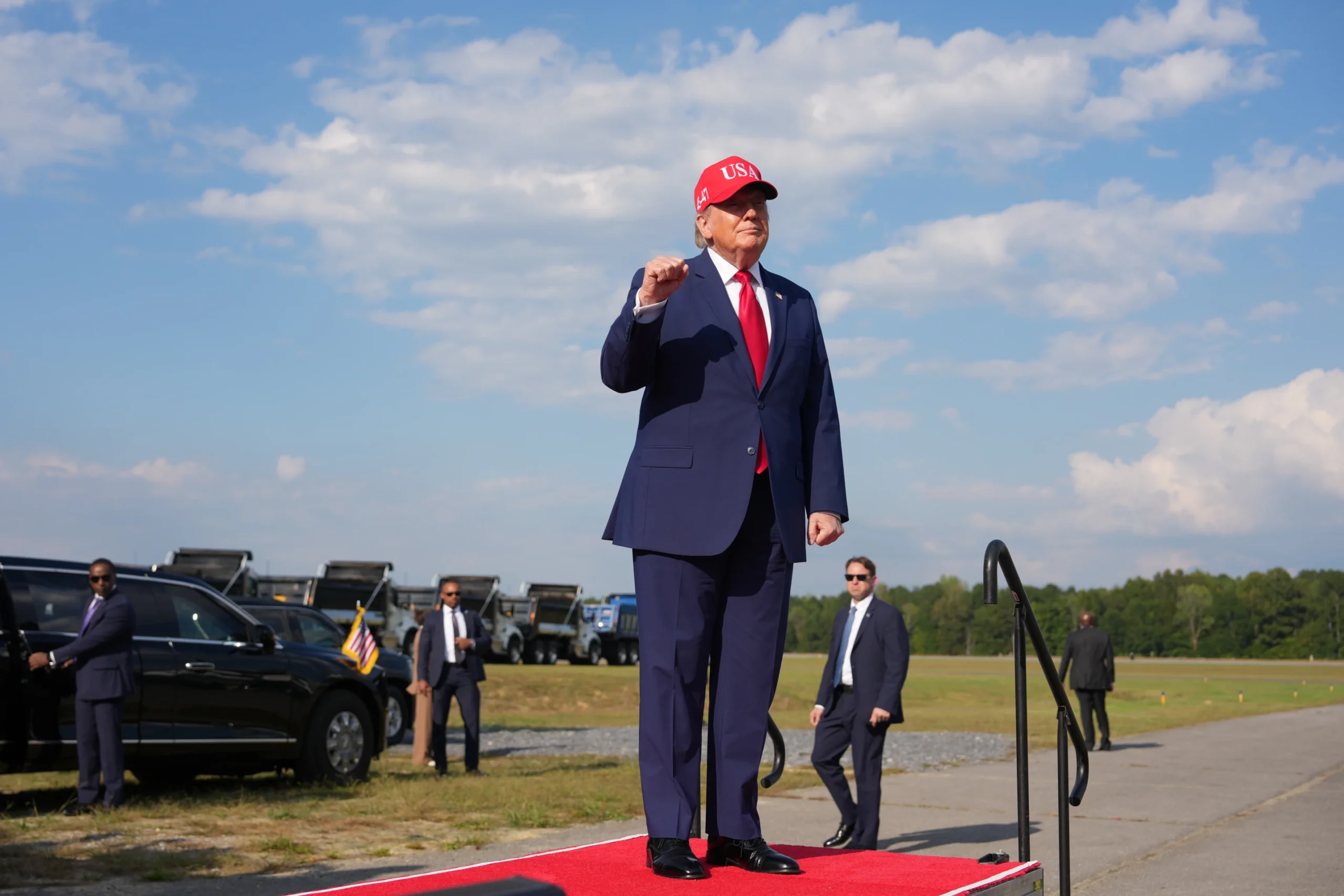
The economic difficulties are raising concerns within Republican ranks as President Donald Trump prepares to visit Kansas and Iowa in a series of campaign appearances aimed at energising supporters ahead of the midterm elections.
Economic Pressures Challenge Republican Strongholds
The financial strain facing farmers could affect voter enthusiasm in states where Republicans have historically enjoyed strong electoral support.
Kansas is attracting particular attention following Trump’s victory in the state by 16 percentage points over Democrat Kamala Harris in the 2024 presidential election. Republican Senator Roger Marshall is now facing a competitive challenge from Democratic candidate Adam Hamilton.
Democrats have not won a US Senate election in Kansas in 94 years, making the race a closely watched contest.
Brunkow’s organisation has endorsed Marshall, but he acknowledged that economic frustrations could influence farmers’ participation in the election.
“I don’t think it necessarily does that,” Brunkow said when asked whether frustrated Republican farmers might switch their support to Democrats. “But I think it dampens the enthusiasm for agriculture producers to get to the polls.”
Beyond the agricultural sector, some Republican voters are expressing dissatisfaction with the party’s economic policies, trade decisions and approach to immigration.
Don Hineman, a western Kansas rancher and former Republican state House majority leader, said frustration is growing among Republican voters, including some who have supported Trump in previous elections.
Hineman argued that Trump’s tariffs have hurt farmers and that the ongoing war with Iran has added to economic uncertainty. He also raised concerns about immigration enforcement operations in western Kansas, where recent raids reportedly resulted in more than 100 people being detained.
“We need a secure border we can all agree on that,” Hineman said. “But we also need workable immigration policy that provides the workforce that the United States has always depended on and will always continue to need.”
He added that traditional Republican warnings about the consequences of electing Democrats are becoming less persuasive to some voters.
“I am tired of being persuaded by charges that the boogeyman is going to get us,” Hineman said, expressing frustration with the party’s political direction.
Voters Express Concerns Over Rising Living Costs
Economic pressures are also influencing voters who have traditionally supported Republicans.
Debbie Geneva, 61, of Nortonville, Kansas, said she was impressed by Hamilton after he visited a local market to meet residents, an interaction she said she had not experienced with Marshall.
Although Geneva has never voted for a Democratic candidate, she said she remains undecided about the Senate race.
“I’ve never voted for a Democrat in my entire life, so that’s a little scary for me to be undecided,” she said.
Geneva cited rising healthcare costs, everyday expenses and trade agreements as factors contributing to her dissatisfaction.
Her uncertainty reflects the broader challenge Republicans face in retaining support among voters who are increasingly concerned about household finances and the economic outlook.
Farmers Struggle With Rising Production Costs
The agricultural sector has faced mounting financial pressure in recent months as the costs of fuel, fertiliser and seeds have increased. Supply disruptions associated with the war involving Iran, alongside constraints affecting fuel supplies, have contributed to the difficulties.
According to the American Automobile Association (AAA), the national average price of diesel reached $6.30 per gallon on Friday, more than 70 per cent higher than a year earlier.
The increase has been particularly difficult during harvest season, when farmers rely heavily on diesel-powered machinery and transport vehicles to collect and deliver crops.
“This is a time of year when we use a lot of fuel, and there just isn’t much we can do,” Brunkow said. “The margins are tight, and anything that cuts into that margin really hurts.”
The US Department of Agriculture projected in its September forecast that net farm income would decline by 2.6 per cent this year, while production expenses would rise by 4.5 per cent. Fuel and oil expenses alone were expected to increase by nearly 30 per cent.
The Trump administration has introduced measures intended to ease some of the pressure. Earlier this month, Trump signed an executive order easing restrictions on the tax-free use of red-dyed diesel, which is commonly used in agricultural operations.
The administration had also announced a $12 billion farmer assistance package in December.
However, these measures have not fully addressed concerns among producers who had expected improved financial conditions under Trump’s leadership.
Brunkow said many farmers had anticipated a better economic outlook but believed Trump remained preferable to the alternative in the 2024 election.
“He’s made some unforced errors,” Brunkow said. “Miscalculations, bad advice, that had unintended consequences.”
Political Concerns Extend to Iowa and Nebraska
The economic challenges facing farmers are also becoming an issue in Iowa and Nebraska, two other states with strong agricultural sectors and traditionally favourable electoral conditions for Republicans.
Trump is scheduled to visit Iowa later in the week, as Republicans defend competitive races for governor and the US Senate.
In Nebraska, Senate Republicans have committed nearly $15 million to support Republican Senator Pete Ricketts against independent candidate Dan Osborn. The scale of spending highlights concerns about the competitiveness of races in states that Trump won comfortably in 2024.
David McIntosh, president of the conservative Club for Growth, said his organisation had been monitoring agricultural states since the summer and was concerned about declining voter enthusiasm.
“Farmers are squeezed between higher input prices and less of an international market because of retaliatory tariffs,” McIntosh said. “The economic environment has not been good.”
The concerns have created an opportunity for Democrats, who are seeking to make economic pressures a central issue in states where they have historically struggled to win statewide elections.
Former Democratic Senator Jon Tester of Montana said he expects Democrats to perform better than anticipated in agricultural states because of the financial difficulties confronting rural communities.
“These guys got to pay bills at the end of the month, and for a number of months now it’s been hard to do,” Tester said. “This is way beyond politics.”
Tester, a third-generation farmer who began farming in 1978, drew comparisons with the US farm crisis of the 1980s, when numerous agricultural families faced severe financial difficulties.
“We’re setting up for the same kind of situation,” he said, arguing that the economics of family farming are now potentially worse than during that earlier crisis.
Agricultural Economy Becomes a Key Election Issue
As the midterm elections approach, the financial difficulties facing farmers are adding a new dimension to the political contest in America’s rural communities.
While rising costs do not necessarily mean that traditionally Republican voters will switch their allegiance to Democrats, political observers and agricultural leaders warn that frustration could reduce turnout and make competitive races more difficult for Republicans.
For farmers, the immediate concern remains the ability to cover production costs and maintain viable operations. For political parties, the challenge is to convince rural voters that their economic concerns are being addressed.
The outcome could help determine whether Republican dominance in key agricultural states remains secure or whether growing dissatisfaction creates openings for Democratic candidates in the upcoming elections.

