

The Mexico military on Sunday killed Nemesio Rubén Oseguera Cervantes, widely known as “El Mencho,” the leader of the Jalisco New Generation Cartel (CJNG), in a major blow to what had become the country’s most powerful and aggressive drug trafficking organization.
The killing, confirmed by Mexico’s Defense Department, followed a military operation in Tapalpa, Jalisco, during which Oseguera Cervantes was wounded and later died while being transported to Mexico City. Authorities said troops came under fire during the operation, resulting in multiple deaths and injuries, as well as the seizure of armored vehicles, rocket launchers and other heavy weapons.
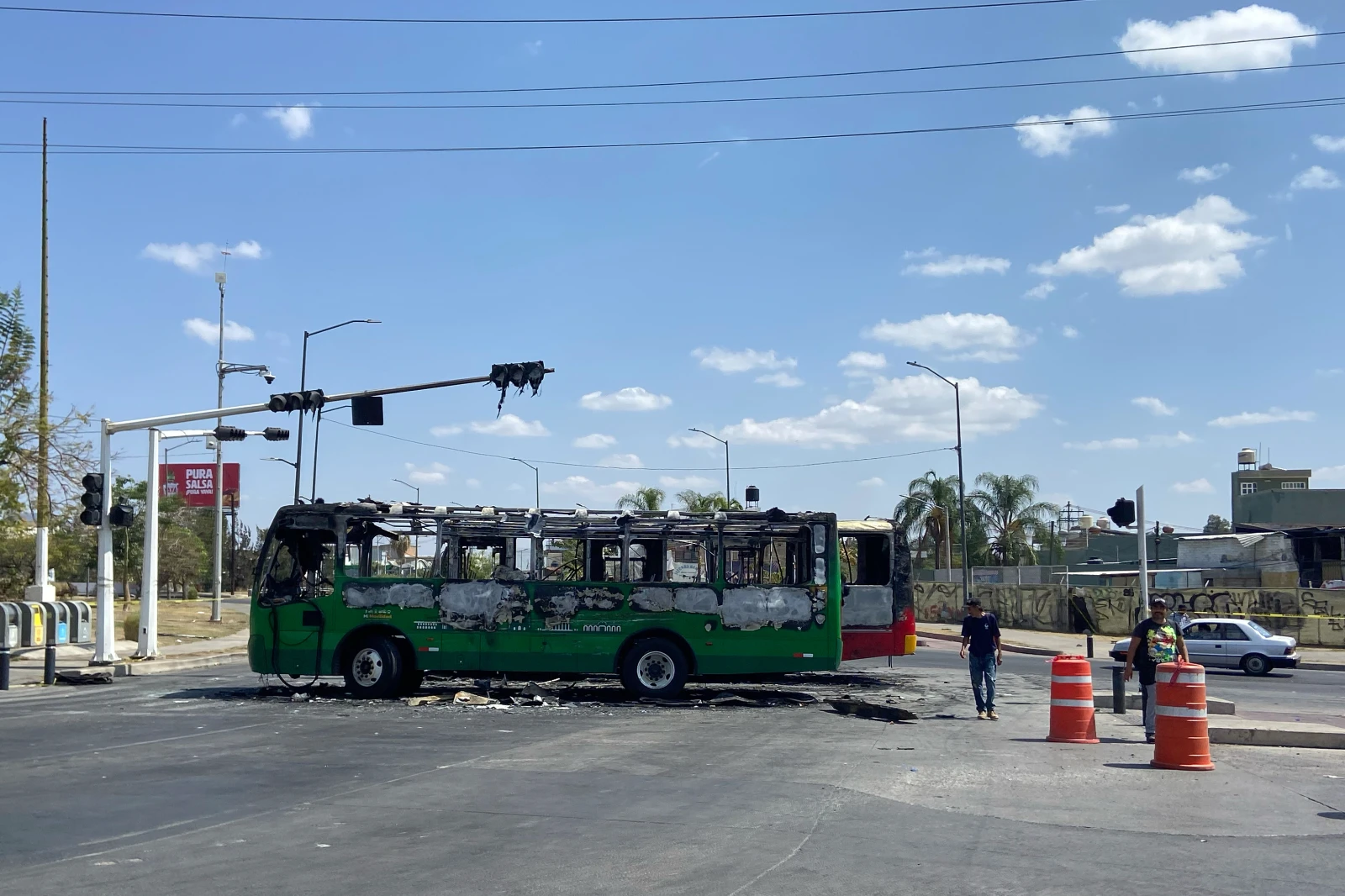
The death of the cartel leader immediately sparked violent reprisals across large parts of the country. Burning vehicles and roadblocks were reported in nearly a dozen states, paralyzing major highways and urban centers. In Guadalajara, the capital of Jalisco, streets emptied as residents sheltered indoors, businesses shut down and public transport was suspended. Schools were closed in several affected states.
Videos shared on social media showed thick smoke rising from key roads, while panic scenes were reported at Puerto Vallarta, a major tourist destination, where flights were canceled and travelers were urged to remain indoors. Several international airlines temporarily suspended operations to the city due to the deteriorating security situation.
The United States Embassy in Mexico said the operation was carried out by Mexican special forces with complementary intelligence support from U.S. authorities, highlighting close bilateral cooperation. Analysts described the killing as Mexico’s most significant show of force yet to the administration of Donald Trump, which has pressed Mexico to intensify its fight against drug cartels, particularly those involved in fentanyl trafficking.
CJNG has long been identified by U.S. and Mexican authorities as a leading producer and exporter of fentanyl, cocaine and methamphetamine to the United States. In February, Washington formally designated the cartel a foreign terrorist organization, and the U.S. State Department had offered a reward of up to $15 million for information leading to Oseguera Cervantes’ capture.
Mexican President Claudia Sheinbaum praised the armed forces for the operation and appealed for calm as security forces worked to restore order. However, the violence revived long-standing concerns over the “kingpin strategy,” in which the removal of cartel leaders has often led to short-term spikes in bloodshed as criminal groups retaliate or fracture.
CJNG is known as one of Mexico’s most militarized criminal groups, with a history of direct attacks on security forces, the use of drones to deploy explosives, and high-profile assassination attempts. U.S. authorities have assessed the cartel as rivaling the Sinaloa Cartel in power and reach, with operations spanning all 50 U.S. states.
As security operations continued, the U.S. State Department advised American citizens in several Mexican states, including Jalisco, Tamaulipas and Michoacán, to remain in safe locations. Canadian authorities issued similar warnings to their nationals.
While the killing of “El Mencho” marks a historic moment in Mexico’s long-running battle against organized crime, officials and analysts warned that the coming days will test the government’s ability to contain the fallout and prevent further escalation.