

Military and diplomatic activity across the Middle East intensified on Sunday as the United States continued moving additional forces into the region amid mounting tensions with Iran, while security analysts warned that a parallel surge in Sunni extremist violence in parts of Syria is receiving far less international attention.
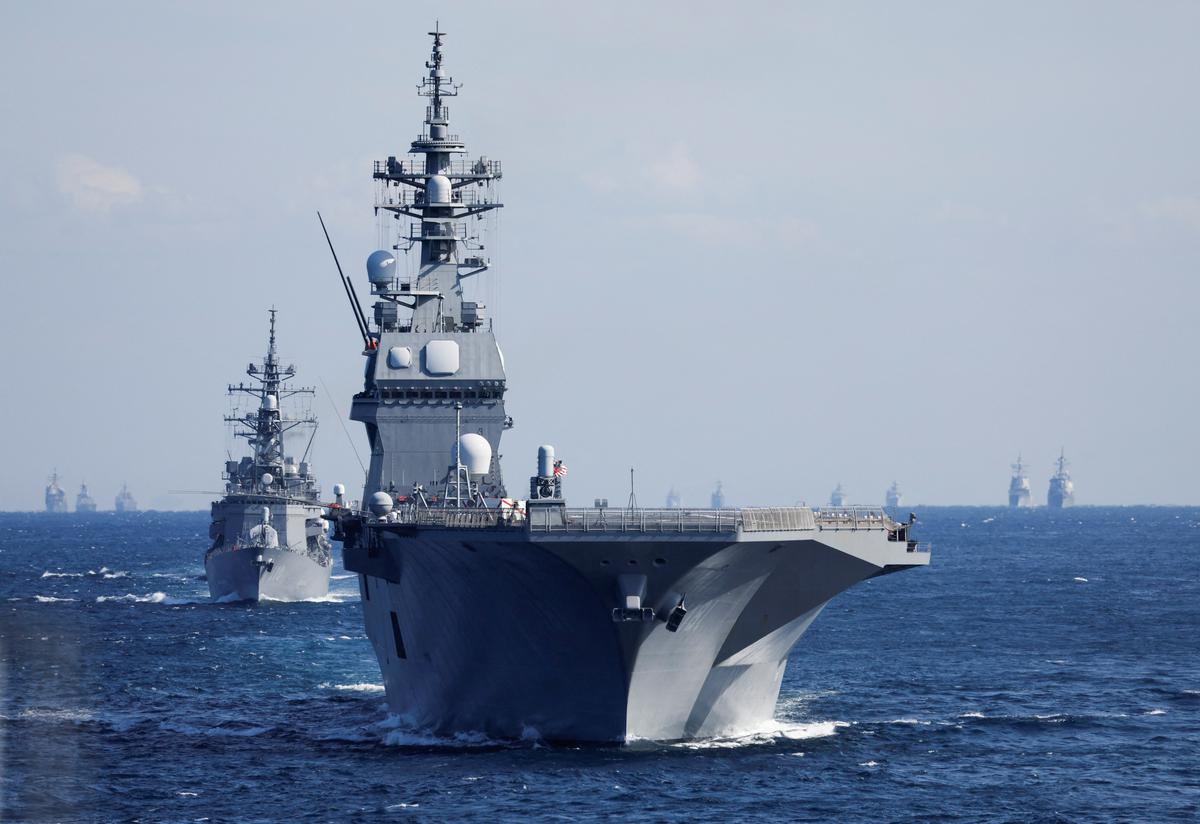
U.S. officials have not disclosed details of specific operations, but multiple defense sources indicate that additional multi-role fighter jets, air defense systems and naval assets are being positioned across the region, strengthening both offensive and defensive capabilities. A large U.S. naval presence is now operating in Middle Eastern waters, including aircraft carrier strike group elements, though the precise location of the aircraft carrier USS Abraham Lincoln has not been publicly confirmed.
Alert levels have been raised in several countries, particularly Israel and Jordan, according to regional security officials. The commander of U.S. Central Command (CENTCOM) has also been conducting a series of coordination visits in Israel and Iraq as part of broader regional consultations.
Despite widespread speculation online, officials stress that there is no public indication of when or how any potential military confrontation involving Iran might unfold. Analysts note that such decisions remain tightly held at the highest levels of the U.S. government.
Houthis Quiet, Focus on Iran
Regional observers have noted a relative lull in public statements and attacks by Yemen’s Houthi movement since Friday, even as attention remains fixed on Iran and its network of allies. The pause has fueled speculation that some groups may be reassessing their posture amid the expanding U.S. military footprint.
While Iran remains the central focus of international concern, a growing number of analysts say violence by Sunni extremist groups in Syria is escalating largely out of the global spotlight.
Warnings Over Extremist Violence in Syria
Human rights monitors and regional experts report that minority communities — including Christians, Druze, Alawites and Kurds — have faced increasing attacks in parts of Syria controlled by hardline Sunni Islamist factions. Some of these groups are linked to forces led by Abu Mohammad al-Jolani, whose organization has sought to rebrand itself in recent years but remains designated as a terrorist group by the United States and others.
Several analysts argue that the international community risks repeating past mistakes by focusing narrowly on countering Iran’s Shiite-aligned network while underestimating the long-term threat posed by Sunni extremist movements.
“The collapse or weakening of one axis of extremism does not automatically lead to stability,” said a Middle East security analyst based in Europe. “If Sunni jihadist forces expand unchecked, the region could face a different but equally dangerous form of instability.”
Debate Over U.S. Strategy
Some regional commentators believe the Trump administration is pursuing a strategy aimed at curbing Iranian influence while maintaining working relationships with certain Sunni-led governments to prevent them from aligning more closely with China and Russia.
Critics, however, caution that tolerating or downplaying abuses by extremist-aligned actors risks undermining stated U.S. commitments to human rights and long-term regional stability.
Israeli security analysts have echoed similar concerns, warning that extremist ideologies regardless of whether they are Shiite or Sunni ultimately pose comparable threats.
“From Israel’s perspective, the distinction between different brands of violent extremism does not change the end result,” one former Israeli security official said. “The ideology remains hostile to pluralism, minorities and the existence of Israel.”
No Immediate Sign of Imminent Conflict
Despite the heightened military movements, U.S. and regional officials continue to say there is no confirmed intelligence pointing to an imminent strike on Iran. Diplomatic channels remain active alongside military preparations.
As tensions persist, civilians across the region are being urged by authorities to remain alert but continue daily routines, while governments quietly prepare for a range of possible scenarios.