

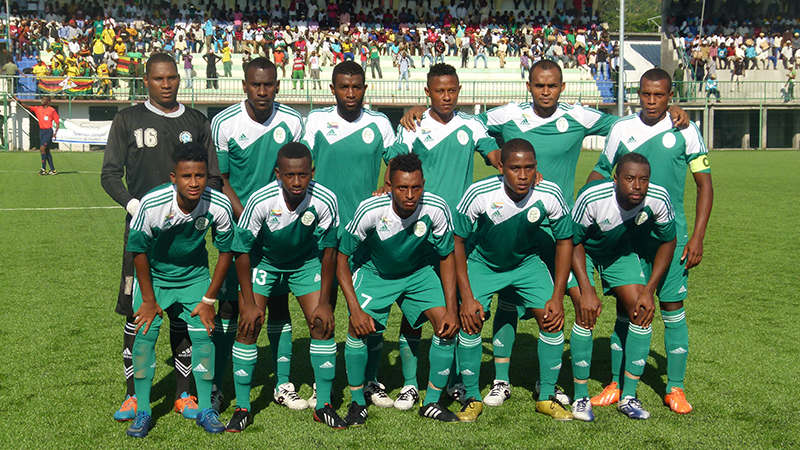
Comoros’ national football team, popularly known as Les Cœlacanthes, carries a name that reaches far beyond sport. The nickname is drawn from the coelacanth, a rare fish species dating back more than 410 million years, which has become a powerful symbol of biodiversity, resilience and national identity for the Indian Ocean island nation.
Locally called Gombessa, the coelacanth was long believed to be extinct until its dramatic rediscovery off the coast of South Africa in 1938. A second specimen found in Comoros waters in 1952 stunned the scientific world, rewriting biology textbooks and placing the small island nation at the heart of one of the most remarkable discoveries in modern science.
Today, Comoros remains one of only a handful of known habitats for the ancient fish, elevating its importance both scientifically and culturally.
“Whether it’s the national football team, basketball team, or individual athletes, everyone calls us the coelacanths,” said Comoros Minister of Environment Abubakar Ben Mahmoud. “It is an integral part of our history and our heritage, and something we must preserve, just like our ocean.”
That heritage is on full display this December as Les Cœlacanthes make their second-ever appearance at the Africa Cup of Nations (AFCON) in Morocco. While the players battle on the pitch, an equally significant effort is unfolding beneath the waves.
From 6 October to 14 November, the Government of the Comoros, in partnership with Nekton and WILDTRUST under the R-POC programme, carried out the First Descent: Comoros mission. The initiative marked the country’s first systematic exploration of its ocean, surveying depths from the surface to 900 metres.
The mission was co-led by Dr Nadjim Ahmed Mohamed of the University of the Comoros and supported by 17 Comorian researchers. It documented previously unexplored marine habitats and established the first Comorian-led research program dedicated specifically to the coelacanth.
“This species is very important to us because it is our national emblem,” Dr Mohamed explained. “It is even featured on our football team’s jersey. It is special because the whole world once believed it was extinct.”
For many Comorians, the survival story of the coelacanth reflects the nation’s own journey. With a population of fewer than one million, Comoros continues to strive for recognition on global stages, whether in science, conservation or football.
“The coelacanth is history — years and years of resilience,” said Hamada Jambay, manager of the national football team. “It shows that Comoros will last. Like the fish, we were deep, and little by little we are rising up the table.”
After a challenging start against hosts Morocco, Les Cœlacanthes will be hoping that the ancient fish’s legacy of endurance proves to be a good omen as they continue their AFCON campaign.