

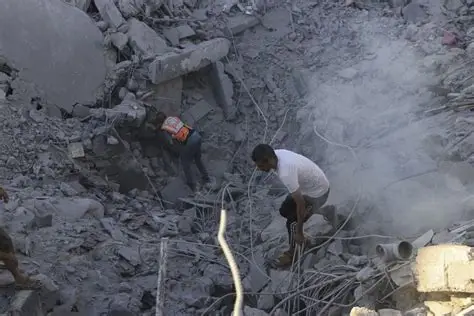
Despite ongoing diplomatic engagements and repeated references to ceasefires and peace initiatives, Israeli military operations against militant groups in Gaza and southern Lebanon continue almost daily, underscoring a widening gap between political messaging and realities on the ground.
Recent talks led by the Trump administration with Turkey and Qatar on a proposed second phase of a Gaza arrangement have drawn skepticism within Israeli political and security circles. Analysts note that both Ankara and Doha maintain long-standing political and financial ties with Hamas and the wider Muslim Brotherhood network, raising doubts about their role as neutral mediators in shaping Gaza’s future.
Security officials argue that negotiations involving states perceived as sponsors or enablers of Hamas risk prolonging the conflict rather than resolving it, potentially allowing militant groups time to regroup and rearm under the cover of diplomatic processes.
At the same time, statements from Beirut suggesting Lebanon is close to disarming Hezbollah in the south have been widely dismissed in Israel as unrealistic. Hezbollah, backed by Iran and deeply embedded within Lebanon’s political and security structures, is not expected to relinquish its arsenal voluntarily. Israeli assessments maintain that the Lebanese state lacks both the capacity and authority to enforce such a move.
Israeli Finance Minister Bezalel Smotrich added to the growing sense of inevitability surrounding renewed conflict when he stated over the weekend that Israel may be forced to launch further military operations in both Gaza and Lebanon before the country’s next general elections in late 2026. His remarks reflect a broader view among hardline officials that decisive military action, rather than prolonged diplomacy, will be required to neutralize threats along Israel’s borders.
Within Israel, there is also recognition of the shift in U.S. policy under President Donald Trump, whose administration has lifted restrictions on weapons transfers and publicly affirmed Israel’s right to continue its military campaign. This stance marks a sharp departure from the previous U.S. administration, which had urged restraint and temporarily curtailed arms support during the conflict.
While Washington continues to explore diplomatic avenues, Israeli officials stress that security in the Middle East has historically been achieved through military dominance rather than negotiated declarations. They argue that Hamas and Hezbollah remain committed to Israel’s destruction and that only sustained pressure can degrade their operational capabilities.
As the war grinds on under changing diplomatic labels, Israel faces mounting decisions about the timing and scale of future operations, amid a regional landscape shaped by Iran’s influence, fragile state institutions, and unresolved hostilities.